
1 Handle vs 2 Handle vs 3 Handle Shower Faucet: Which Is Best for Your Bathroom?

By Julian Gill Updated · 6 min read
Disclosure: Some of the links in this article may be affiliate links, which can provide compensation to me at no cost to you. You can read our affiliate disclosure in our privacy policy.
In this article
- 1 vs 2 vs 3 Handle Shower Faucets at a Glance
- How Each Type of Shower Faucet Works
- 1-Handle Shower Faucet
- 2-Handle Shower Faucet
- 3-Handle Shower Faucet
- Building Code and Scald Protection
- Pros and Cons of Each Option
- 1-Handle Shower Faucet
- 2-Handle Shower Faucet
- 3-Handle Shower Faucet
- How to Choose the Right Shower Faucet
- FAQs
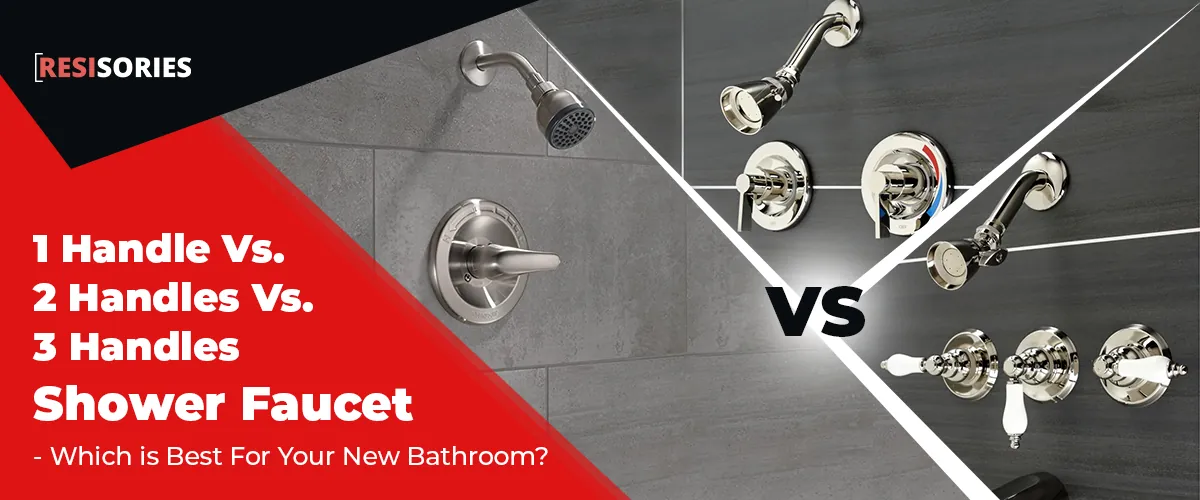
The handle on your shower does more than turn the water on. It sets the temperature, decides how much water flows, and on many setups chooses between the tub spout and the shower head. When you remodel, you can pick one, two or three handles, and each one changes how the shower feels to use and what goes on inside the wall. Here is how they compare.
Quick answer
For most bathrooms, a single-handle shower faucet is the best choice. It needs only one hole in the wall, works with one hand and almost always has scald protection built in. Two- and three-handle faucets are best when you want a classic or vintage look, as long as the valve behind them meets code.
Key takeaways
- One handle: one lever for temperature, one hole in the wall, easiest to use and to install.
- Two handles: separate hot and cold handles, a classic look, more holes and more parts.
- Three handles: hot, cold and a middle diverter that switches between the tub spout and the shower head.
- Scald protection is the rule: whatever you choose, the valve must be pressure-balancing or thermostatic to meet most codes.
1 vs 2 vs 3 Handle Shower Faucets at a Glance
| Feature | 1 handle | 2 handles | 3 handles |
|---|---|---|---|
| Controls | One lever for temperature (some models also set volume) | Hot on the left, cold on the right | Hot, cold and a middle diverter |
| Holes in the wall | One | Two | Three |
| Scald protection | Usually built into the valve | Needs a compliant valve | Needs a compliant valve |
| Tub or shower switch | Diverter on the tub spout or a separate control | Diverter on the tub spout | Middle handle |
| Ease of use | Easiest, one hand | Two hands to mix the temperature | Two hands, plus the diverter |
| Best for | Most homes, families and seniors | Classic and vintage styles | Matching an older tub and shower setup |

How Each Type of Shower Faucet Works
Best for most homes
1-Handle Shower Faucet
You turn or lift one lever to set the temperature. Behind the trim, a single valve mixes hot and cold water. On most basic models the water comes out at full flow and the handle only sets the temperature; some models also let you adjust the volume.
Most single-handle valves have pressure balancing built in. If someone flushes a toilet and the cold pressure drops, the valve cuts back the hot side so you do not get scalded.
Classic look
2-Handle Shower Faucet
One handle controls the hot water and the other the cold. The usual setup puts hot on the left and cold on the right. You mix the temperature yourself by turning both.
Two-handle faucets are still allowed by most building codes, but the valve in the wall must provide scald protection. See our picks for the best 2-handle shower faucets.
Older tub and shower setups
3-Handle Shower Faucet
The left handle controls the hot water, the right handle the cold, and the middle handle is the diverter. Turning it sends the water either to the tub spout or up to the shower head.
Like the two-handle setup, it needs a scald-protecting valve in the wall to meet code in most areas.
Building Code and Scald Protection
This is where many people get confused. Building codes do not usually ban two- or three-handle showers. What most residential codes require is that a shower valve protects against sudden temperature changes. That means a pressure-balancing valve, a thermostatic valve, or a combination of both.
Almost every single-handle shower valve sold today has this protection built in, so you meet code without extra parts. With two or three handles, you have to make sure the valve system behind them is rated for it. That often means more planning and more work inside the wall.
If you already have an old two- or three-handle shower, it can usually stay as it is. Once you open the wall and replace the valve, though, you are generally expected to bring it up to current code. Rules vary by city, so check with your local building department.
If you are comparing valves, our guides on the Moen 2510 vs 2520 shower valves, the Delta R10000 vs R11000 and the Delta R22000 vs R22000WS explain the differences.
Pros and Cons of Each Option
1-Handle Shower Faucet
Pros
- Only one hole in the wall to install
- One handle controls the temperature
- Turns on and off with one hand
- Easy for children and older people to use
- Scald protection usually built in
Cons
- Basic models do not let you lower the flow
- Looks more modern than traditional
- Converting from a multi-handle setup means opening the wall
2-Handle Shower Faucet
Pros
- Classic, symmetrical look
- Familiar hot and cold controls
- Fits traditional and vintage bathrooms
Cons
- Takes two hands to find the right temperature
- More holes, more trim, more parts that can leak
- Valve must be checked for scald protection
3-Handle Shower Faucet
Pros
- Dedicated diverter handle in the wall
- Matches older tub and shower combos
- Distinctive, traditional style
Cons
- Three holes and the most parts to maintain
- Hardest to keep at a steady temperature
- Valve must be checked for scald protection
How to Choose the Right Shower Faucet
- You want simple and safe: choose a single handle. It is the easiest to live with, especially with kids or older family members.
- You are keeping the existing wall: match the number of holes you already have, or plan a trim plate big enough to cover the old ones.
- You love a vintage look: two or three handles fit, as long as the valve meets code.
- You are remodeling anyway: this is the best time to move to a single-handle valve, because the wall is already open.
FAQs
Are two-handle shower faucets still allowed by code?
Yes, as long as the valve behind them provides scald protection (pressure-balancing or thermostatic). Check your local code before you buy.
What does the middle handle on a three-handle shower do?
It is the diverter. It sends the water either to the tub spout or up to the shower head.
Can I replace a three-handle shower faucet with a single handle?
Yes. You open the wall, replace the old valve with a single-handle valve and cover the extra holes with a large trim plate or new tile. Our guide on how to replace a single-handle shower faucet shows the trim side of the job.
Does a single-handle shower faucet control water pressure?
On most basic models the handle mainly sets the temperature and the water comes out at full flow. Some models also let you adjust the volume.
Which shower faucet is easiest for seniors?
A single-handle lever is usually the easiest. It works with one hand, and its built-in scald protection keeps the temperature steady.
For most bathrooms, the single-handle shower faucet wins: one hole, one hand and scald protection built in. Choose two or three handles only if you want a specific traditional look, and make sure the valve in the wall meets your local code. If you are remodeling, it is the right moment to make the switch.