
How to Clean a Rain Shower Head (Easy and Best Method)

By Julian Gill Updated · 6 min read
Disclosure: Some of the links in this article may be affiliate links, which can provide compensation to me at no cost to you. You can read our affiliate disclosure in our privacy policy.
In this article
Your shower suddenly feels weak, or the water shoots off in odd directions. Before you blame the rain shower head and buy a new one, look at the nozzles. Chances are they are clogged with mineral buildup, and a good cleaning will bring that full, even rainfall right back.
Quick answer
The easiest way to clean a rain shower head is to fill a plastic bag with white vinegar, tie it around the head with a rubber band so the face is submerged, wait about an hour, then rinse and dry. For heavy buildup, remove the head, scrub it with a soft toothbrush and vinegar, clear the holes with a toothpick and soak it overnight.
Key takeaways
- Weak or uneven spray usually means clogged nozzles, not a broken shower head.
- White vinegar dissolves mineral deposits and is gentle on most finishes.
- Never use bleach and never scrub with anything harder than a soft brush.
- Check your shower head's manual before you start, because features and parts differ.
Why You Should Clean Your Rain Shower Head
A rain shower head has many small nozzles spread over a wide face. Hard water leaves calcium and lime behind each time you shower, and those deposits slowly narrow or block the holes. The result is lower flow, uneven spray and jets that squirt sideways.
Keeping the head clean also matters for hygiene. The warm, damp inside of a shower head can build up a film where bacteria grow. Regular cleaning keeps it in check, along with the flow.
Protect the finish
Take care not to damage your shower head's finish. Always use a soft brush, never bleach or abrasive pads. Grab the instructions that came with your shower head too: the steps below are general, and your model may have different features or parts.
Method 1: The Vinegar Bag Soak (No Removal)
This is the quickest method and works well for regular upkeep or light buildup.
What You Need
- White vinegar
- A plastic bag large enough for the head
- A rubber band or zip tie
- A soft cloth
- Fill the bag with vinegar
Pour enough white vinegar into the plastic bag to cover the face of the shower head.
- Secure the bag
Slip the bag over the head and fasten it to the arm or neck with a rubber band. Adjust it until the whole face of the head is immersed in the vinegar.
- Wait about an hour
Let the vinegar work for about one hour. It softens and dissolves the mineral deposits in the nozzles.
- Rinse and dry
Remove the bag, run the shower for a minute to flush out the loosened scale, then dry the head with a soft cloth. It should look and spray like new.
Method 2: Deep Clean with Vinegar and Baking Soda
When the vinegar bag is not enough, take the head down and clean it properly.
What You Need
- Adjustable wrench
- A towel or soft cloth
- White vinegar
- Baking soda
- A plastic bag
- An old soft toothbrush
- A wooden toothpick
- Remove the shower head
Wrap the connection in a towel to protect the finish, then carefully unscrew the head with your wrench.
- Rinse it
Hold the head under a running faucet to wash away as much loose dirt and scale as possible before you start cleaning.
- Scrub with vinegar
Dip a soft toothbrush in vinegar and gently scrub the face and nozzles.
- Clear the holes
Look closely at the nozzles. If debris is stuck in any of them, work it loose with a wooden toothpick. Wood is soft enough not to damage the holes.
- Soak overnight
Place the head in a plastic bag of vinegar and add a tablespoon of baking soda. It will fizz, so add it slowly and leave room in the bag. Let it sit overnight.
- Rinse and reinstall
Rinse the head well with clean water, then reconnect your shower head with fresh plumber's tape on the threads.
Method 3: Use a Limescale Remover
If you would rather not use vinegar and baking soda, a limescale remover is the alternative. It is also helpful when buildup is very heavy.
- Remove the rubber washer
Take the shower head down, then pull out the rubber washer from the inlet with a small screwdriver or the tip of a pair of scissors. Keep it safe for reassembly.
- Apply the remover
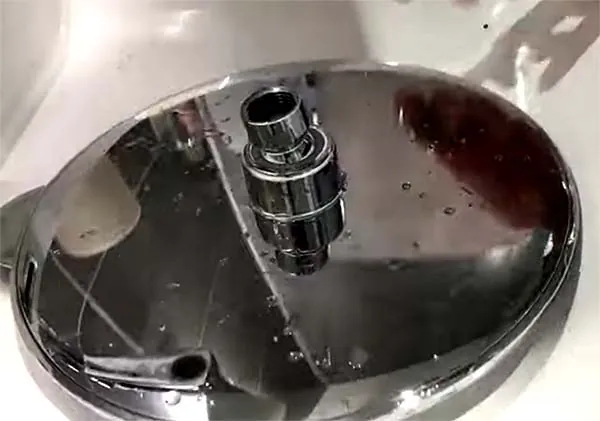
Fill the sink with hot water. Spray the shower head well with a good limescale remover and fill the head with it.
- Soak the head
Put the head in the sink and make sure its top goes under the water level. Leave it to soak. Long soaks of up to 24 hours are sometimes used for heavy scale, but always follow the soaking time on the product label and check that it is safe for your finish.
- Drain and rinse
Pull the sink plug, rinse the head thoroughly with clean water, put the washer back and reinstall it. You will have a shiny shower head.
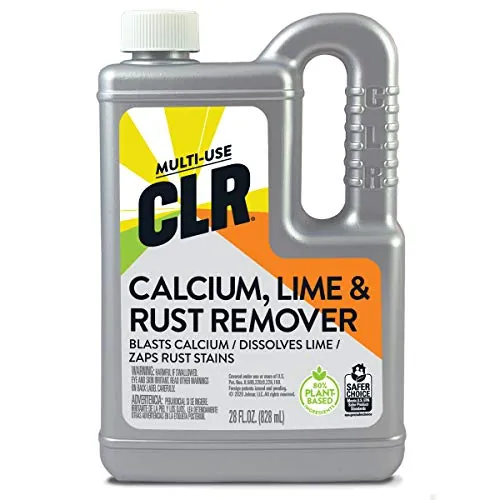
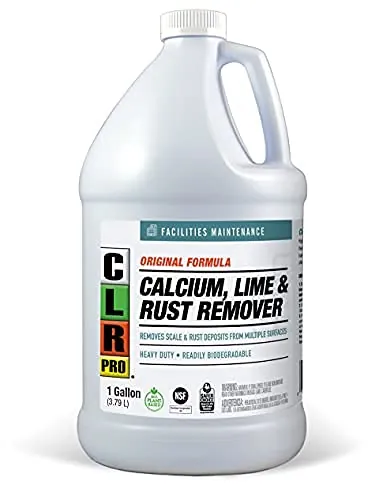
The method only works as well as the product you use. These are two of the best-selling calcium, lime and rust removers:
Video Tutorial
This video shows how to remove a rainfall shower head and descale it:
Common Mistakes to Avoid
- Using bleach or abrasive cleaners: they can ruin the finish.
- Poking holes with metal: a pin or nail can enlarge or scratch the nozzles. Use a wooden toothpick.
- Gripping the head with a bare wrench: always wrap it in a towel first.
- Losing the rubber washer: without it, the head will leak when you put it back.
- Waiting too long: light, regular cleaning is much easier than chipping off years of scale.
Live in a hard water area and tired of descaling? A shower head from our best shower heads for hard water guide clogs less often. For a regular shower head, see how to clean a shower head with vinegar.
FAQs
How often should I clean a rain shower head?
Wipe the nozzles every week or two and give the head a vinegar soak whenever the spray gets weak or uneven. With hard water, you will need to descale more often.
Can I clean a rain shower head without removing it?
Yes. Fill a plastic bag with white vinegar, tie it around the head with a rubber band so the face is submerged, wait about an hour, then rinse and dry.
Can I use bleach on my shower head?
No. Bleach can damage the finish of the shower head. Use white vinegar or a limescale remover that is safe for your finish, and a soft brush.
Why is my rain shower head still spraying unevenly after cleaning?
Some nozzles are still blocked. Rub the rubber nozzles with your finger, clear stubborn holes with a wooden toothpick and soak the head again.
A clogged rain shower head is almost always a cleaning job, not a replacement. Start with the vinegar bag, move to a deep clean with baking soda if needed, and keep a limescale remover for the toughest cases. Clean it a little and often, and your rainfall will stay full and even.