
How to Replace a Single Handle Shower Faucet: Step-by-Step Guide

By Julian Gill Updated · 7 min read
Disclosure: Some of the links in this article may be affiliate links, which can provide compensation to me at no cost to you. You can read our affiliate disclosure in our privacy policy.
In this article
- Before You Start: Trim Swap or Valve Replacement?
- Tools and Materials You Need
- How to Replace a Single Handle Shower Faucet
- Pointers for a Successful Installation
- Repair Any Water Damage Before You Close Up
- Don't Forget the Leak Check
- Set the Temperature Limit Stop
- Ask for Help When You Need It
- Common Mistakes to Avoid
- FAQs
A tired single-handle shower faucet is one of the most rewarding DIY bathroom upgrades. A new handle and trim change the look of the whole shower, and a new cartridge fixes drips and temperature problems at the same time. Here is how I replace one safely, step by step, without turning the job into a flooded wall.
Quick answer
To replace a single handle shower faucet, shut off the water, remove the handle and trim, pull out the retaining nut or clip and the old cartridge, install the new cartridge, then fit the new trim and handle, set the temperature limit stop and test for leaks. If the new faucet does not match your valve, the valve body in the wall must be replaced too.
Key takeaways
- Know your valve: matching the new trim to the valve in the wall decides how big the job is.
- Shut off the water at the main and drain the pressure before you start.
- Moderate to advanced job: plan 1 to 4 hours, longer if you open the wall.
- Never skip the leak test or the temperature limit stop.
Before You Start: Trim Swap or Valve Replacement?
A single-handle shower faucet has two parts. The valve body sits inside the wall and connects to the hot and cold supply pipes. The cartridge sits inside the valve and does the mixing. The handle and the round plate (the escutcheon) are the visible "trim".
If you buy a new faucet from the same brand and the trim is compatible with your existing valve, you only replace the cartridge and the trim. That is the job described step by step below. If you switch brands, or the valve body is damaged, the valve itself has to come out, and that means opening the wall and cutting and joining pipes.
This is a moderate to advanced job and can take 1 to 4 hours in total. If it is your first faucet replacement, read this guide through a couple of times and consider having an experienced plumber on site, or at least on call.
Tools and Materials You Need
For a cartridge and trim swap, these basics are enough:
- Phillips and flat-head screwdrivers
- Allen keys
- Pliers
- Utility knife (to cut old caulk)
- Cleaning rags
- New faucet trim kit and cartridge
- Rubber seats and O-rings if your valve uses them
- Silicone plumber's grease
- Silicone caulk
If you have to replace the valve body in the wall, you will also need:
- Reciprocating saw and hand saw
- Tube cutter
- Torch and gas tank, solder and flux (for copper pipes)
- Fittings and connectors to suit your pipes
- New valve body
Safety first
Turn off the water to the house and drain the lines before you open the valve. If you use a torch on copper pipes, protect the wall and studs with a heat shield, keep a fire extinguisher close and check the area for smoldering spots after you finish. If you are not comfortable soldering, call a plumber for that part.
How to Replace a Single Handle Shower Faucet
- Prepare your space
Lay a towel in the tub or shower tray to protect it and to catch small screws. Cover the drain so nothing falls in.
- Turn off the water to your home
Close the main water valve, then open the shower and a faucet on the lowest floor to drain the remaining pressure.
- Remove the handle and trim to expose the valve
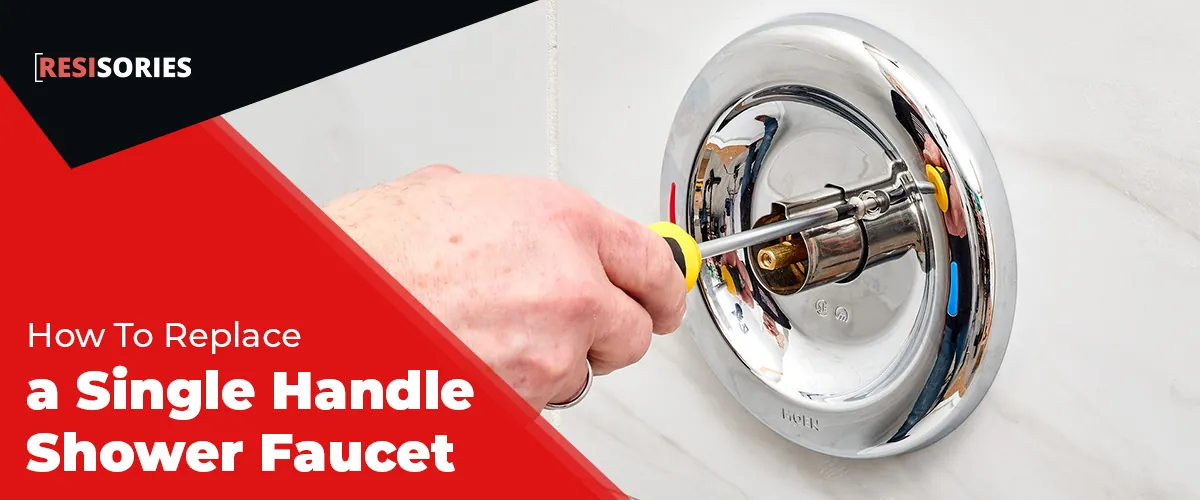
Pry off the cap on the handle, loosen the screw underneath and pull the handle off. Cut the old caulk around the escutcheon, remove its screws and take it off the wall.
- Loosen the locking nut
Remove the retaining nut or clip that holds the cartridge in the valve body. Take a photo first, so you can put everything back the same way.
- Pull the old cartridge out
Grip the cartridge stem with pliers and pull it straight out. If it is stuck from mineral buildup, a cartridge puller made for your brand makes this much easier.
- Fit new rubber seats
If your valve uses rubber seats, remove the old ones and press new ones into place on both sides. Wipe the inside of the valve body clean with a rag.
- Install the new cartridge with its O-rings
Coat the O-rings with a thin film of silicone plumber's grease. Push the new cartridge into place in the correct orientation, usually with the hot side marked, and refit the nut or clip.
- Install the new escutcheon plate
Place the new plate over the valve with its gasket and screw it to the wall.
- Install the trim and handle
Fit the remaining trim pieces and the new handle, and tighten the handle screw.
- Test for temperature and leaks
Turn the water back on slowly. Run the shower from cold to hot, check that the temperature responds correctly and look for drips around the plate and handle.
- Caulk and finish up
Once everything works, run a bead of silicone caulk around the top and sides of the escutcheon. Leave a small gap at the bottom so any water that gets behind the plate can drain out.
Pointers for a Successful Installation
Repair Any Water Damage Before You Close Up
When the trim is off, or the wall is open, look at the area around the valve. If you see signs of water damage such as weakened studs, soft drywall or mold, repair it before going further. It takes more time, but water damage is always serious, and covering it up only makes it worse.
Don't Forget the Leak Check
After everything is connected, check for leaks before you close anything up or caulk. A loose nut here or a misplaced connector there is a simple fix now, and a big repair once the wall is closed.
Set the Temperature Limit Stop
Nobody wants to be scalded in the shower. Most single-handle valves have an adjustable limit stop that controls how far the handle can turn toward hot. Set it following the manufacturer's instructions, then test the hottest position with a thermometer or your hand before you finish.
Ask for Help When You Need It
Whether you are new to DIY or experienced, even a "simple" job can call for a second pair of hands or a different kind of experience. If you have to solder in a tight wall cavity, or the valve body is corroded, calling a plumber is the smart move.
Common Mistakes to Avoid
- Buying trim that doesn't fit the valve: check compatibility before you open the box.
- Forgetting to drain the pressure: water stays in the lines even after the main is closed.
- Installing the cartridge dry: dry O-rings tear and leak, so use silicone grease.
- Caulking the whole escutcheon: leave the bottom open so water can escape.
- Closing the wall without an access panel: you may need to reach the valve again.
If your faucet only drips and the trim still looks fine, you may not need a full replacement. A new cartridge often solves it, as our guides on the Moen 1200, 1222 and 1225 cartridges and on fixing a leaky tub faucet explain.
FAQs
How long does it take to replace a single handle shower faucet?
Plan on 1 to 4 hours. A cartridge and trim swap is at the short end, while replacing the valve body inside the wall takes much longer.
Can I replace a shower faucet without replacing the valve?
Often yes. If your new trim is made for the valve already in the wall, you only change the cartridge, the handle and the trim plate. A different brand usually needs a new valve.
Do I need to turn off the water to the whole house?
Usually yes, because most showers have no shutoff of their own. Turn off the main valve, then open a faucet on the lowest floor to drain the pressure.
What is a temperature limit stop?
It is a small adjustable stop on the valve that limits how far the handle can turn toward hot. Setting it correctly helps prevent scalding.
Replacing a single handle shower faucet is very doable when you know which job you are facing: a cartridge and trim swap, or a full valve replacement. Shut off the water, take photos as you go, check for leaks before you caulk and set the limit stop. Then enjoy a shower that looks new and works like new.