
Delta R10000 vs R11000 Shower Valve: Which One Does Your Bathroom Need?

By Julian Gill Updated · 11 min read
Disclosure: Some of the links in this article may be affiliate links, which can provide compensation to me at no cost to you. You can read our affiliate disclosure in our privacy policy.
In this article
- Delta R10000 vs R11000 at a Glance
- What Is the Difference Between the R10000 and the R11000?
- Delta R10000 and R11000 Reviews
- Delta R10000-UNBX
- Delta R10000-UNBXHF
- Delta R10000-UNWSHF
- Delta R11000-UNWS 524894
- How to Choose the Right Delta Valve
- R10000-UNBX
- R10000-UNWSHF
- R10000 plus R11000-UNWS
- How to Install the Delta R10000 and R11000
- Installing the R10000
- Installing the R11000
- Mistakes to Avoid
- Frequently Asked Questions
Delta's R10000 and R11000 look alike in the box, and their names differ by one digit, so people often buy the wrong one. They do two different jobs behind the wall. In this guide I explain what each valve does, which version of the R10000 suits your shower, and how both go in.
Quick answer
Buy the R10000 to control temperature and flow, and add the R11000 only if you want to send water to more than one outlet. For a tub and shower, the R10000-UNBX is the right body; for a shower without a tub spout, choose the high-flow UNBXHF or UNWSHF; for a custom shower with a top shower and a wall or hand shower, pair an R10000 with the R11000-UNWS diverter.
In my experience as a plumber, the rough-in valve is the part of a shower people think about least and regret most. Once the tile is up, changing it means opening the wall. So take five minutes now to match the valve to your layout.
Key takeaways
- Different jobs: the R10000 mixes hot and cold water; the R11000 diverts the mixed water to up to three outlets.
- Tub or no tub: the standard UNBX suits a tub and shower; the HF (high flow) versions are meant for showers without a tub spout.
- Stops are worth it: "WS" versions have built-in stops, so you can shut off the valve to service it without cutting the water to the house.
- The trim decides the cartridge: the valve body is only the rough-in; the cartridge and handle come with the MultiChoice trim kit.
- Mark "UP" before you close the wall: both valves must be installed with the word UP facing up, at the right depth.
Delta R10000 vs R11000 at a Glance
| Product | What it is | Best for | Price |
|---|---|---|---|
| Delta R10000-UNBX | MultiChoice valve body, 1/2 in universal inlets and outlets | Tub and shower with a tub spout | Check Price |
| Delta R10000-UNBXHF | MultiChoice valve body, 1/2 in universal, high flow | Shower without a tub spout | Check Price |
| Delta R10000-UNWSHF | MultiChoice valve body, 1/2 in universal, high flow, with stops | Shower without a tub spout, easy servicing | Check Price |
| Delta R11000-UNWS 524894 | 3-port diverter rough-in, forged brass | Top shower plus wall or hand shower | Check Price |
What Is the Difference Between the R10000 and the R11000?
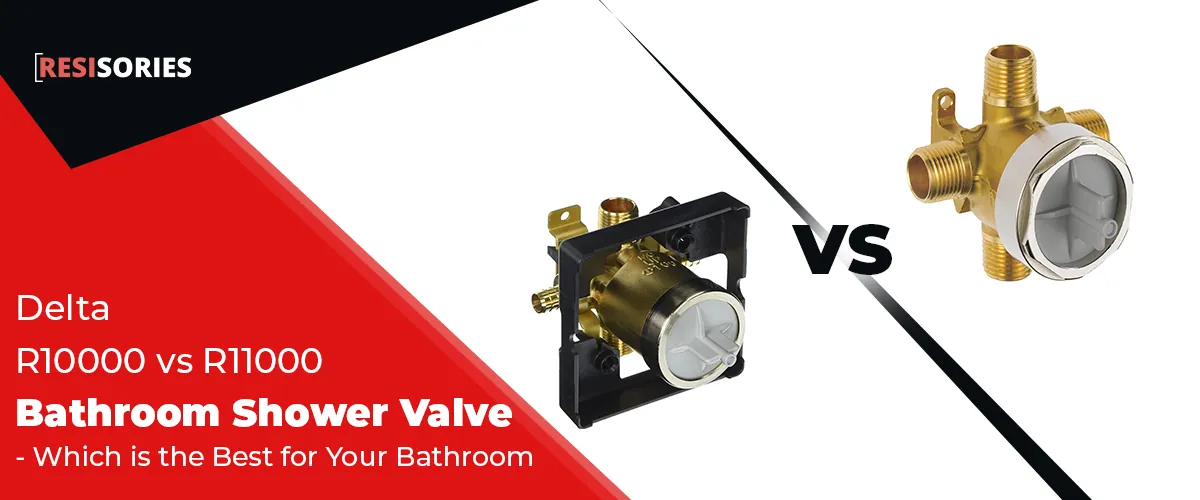
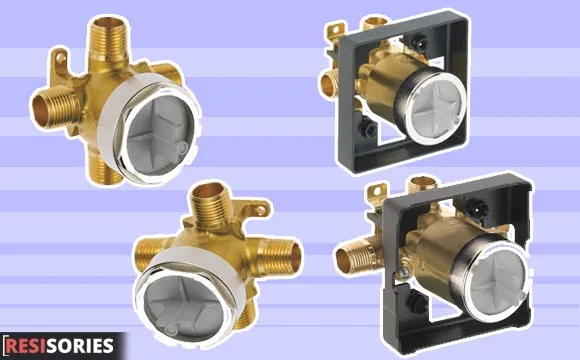
The R10000 is Delta's MultiChoice universal valve body. It sits in the wall behind the handle, takes in hot and cold water, and sends out mixed water at the temperature you set. It is the heart of most Delta single-handle tub and shower setups.
The R11000 is a diverter rough-in. It does not mix water. It takes the mixed water from a valve like the R10000 and routes it to up to three outlets, for example a top shower, a wall shower and a hand shower. You only need it for a custom shower with more than one outlet.
So the real question is not "R10000 or R11000" but "do I need a diverter on top of my valve?" For a standard tub and shower, the answer is no.
Delta R10000 and R11000 Reviews
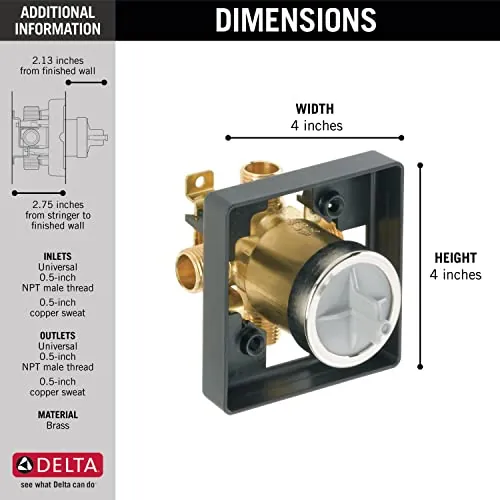
This is the standard MultiChoice valve body, made for shower units, tubs and tub spouts. It has 1/2-inch universal inlets and outlets and works with Delta's MultiChoice tub and shower trims. Because the body stays in the wall, you can change the trim style later without opening it again.
It is a common choice when you replace an old three-handle valve with a single handle. Installed correctly, with the word UP facing up and at the right depth, it can run for years without trouble. The catch is that the instructions are short on some details, such as the depth of the plastic clip and plaster guard, so read them twice before you solder.
- Type
- MultiChoice universal valve body
- Connections
- 1/2 in universal inlets and outlets
- Use
- Shower units, tubs and tub spouts
Pros
- Reasonably priced rough-in valve
- Works with tub and shower setups and tub spouts
- Good choice to replace an old three-handle valve
- Straightforward to install for someone who knows rough plumbing
Cons
- Some buyers report it does not suit certain newer models, so check the trim first
- Instructions are vague about the plastic clip depth
- Mistakes are easy for a first-time DIYer
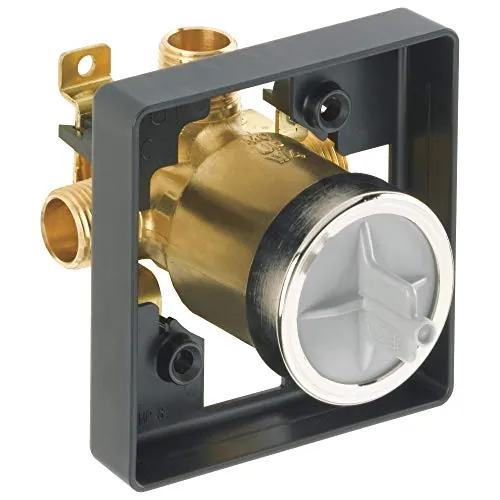
The UNBXHF is the high-flow version of the same body. "HF" means the water moves through the pipes with fewer restrictions, which suits a shower with a generous showerhead. It is recommended for showers without a tub spout, so do not use it on a tub and shower combination.
It fits easily in the wall, and it is a good replacement when you cut out an old valve. Like every MultiChoice body, it relies on the cartridge from the trim kit to keep hot and cold water from crossing over. Until that cartridge is in, leave the test cap on and do not run the shower.
- Type
- MultiChoice universal valve body, high flow
- Connections
- 1/2 in universal inlets and outlets
- Use
- Showers without a tub spout
Pros
- Easy to fit in the wall
- Installs well after cutting out an old valve
- Water flows with fewer restrictions
- Well designed for shower-only setups
Cons
- Some buyers received defective parts, so check everything before you start
- A poor installation causes problems later
- Not for tub and shower combinations
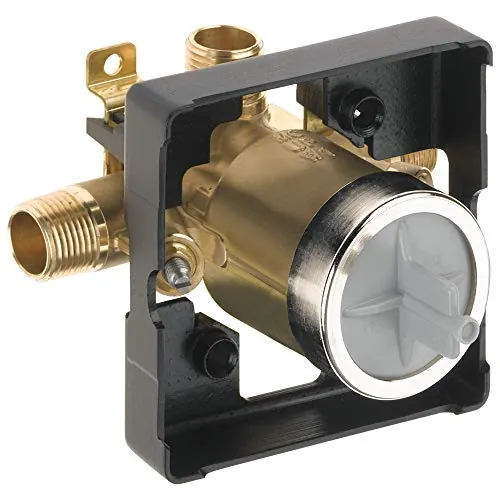
The UNWSHF is the high-flow body with screwdriver stops built in. The stops let you shut off hot and cold at the valve, so a future cartridge change does not mean turning off the water to the whole house. On a shower-only job, this is the version I recommend.
Owners like how easy it is to install, how light it is and the better shower pressure compared with their old valve. One warning: it is wider than some original valves, so it may not drop into the space of the one you remove. Plan to adjust the framing or the supply lines.
- Type
- MultiChoice universal valve body, high flow
- Connections
- 1/2 in universal inlets and outlets
- Stops
- Yes, screwdriver stops
- Use
- Showers without a tub spout
Pros
- Built-in stops make servicing much easier
- Easy to install and not heavy
- Better shower pressure than many older valves
- Cartridge keeps hot and cold water flows separate
Cons
- Wider than some original valves, so it may not fit the old opening
- Not for tub and shower combinations
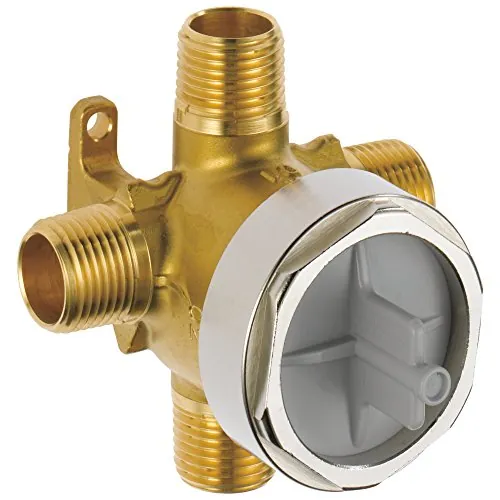
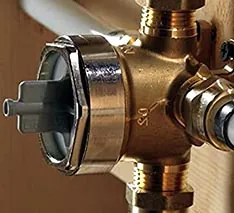
The R11000 is the rough-in kit for Delta's 3-setting and 6-setting custom shower diverter trims. It has three ports, so one handle can feed a top shower and a wall shower. You install it next to your mixing valve and finish it with a matching Delta trim kit.
The body is forged brass, and it can be pressure tested at 200 psi with air and 300 psi with water. Buyers describe it as good value and easier to install than some other Delta rough-ins. Still, it adds lines and joints behind the wall, so it is a job for someone with rough plumbing experience.
- Type
- 3-port diverter rough-in
- Body
- Forged brass
- Pressure test
- 200 psi air, 300 psi water
- Trim
- Delta 3-setting and 6-setting diverter trims (sold separately)
Pros
- Good value for a diverter rough-in
- Feeds several outlets from one handle
- Forged brass body
- Installation is simpler than some other Delta rough-ins
Cons
- Not a DIY job for beginners
- Needs a separate mixing valve and trim kit
How to Choose the Right Delta Valve
Tub and shower
R10000-UNBX
One showerhead and a tub spout. This is the most common bathroom, and the standard body is all you need.
Shower only
R10000-UNWSHF
No tub spout. Choose a high-flow body, ideally the version with stops.
Custom shower
R10000 plus R11000-UNWS
Two or three outlets. The R10000 mixes the water and the R11000 diverts it to each outlet.
How to Install the Delta R10000 and R11000
These are general steps. Always follow the instructions in the box, and check your local code before you open the wall.
- Tape measure and level
- Drill, screws and wood for a stringer
- Pipe cutter
- Torch, solder and flux for copper
- Pipe thread sealant for threaded joints
- Screwdriver and adjustable wrench
Safety first
Turn off the main water supply and drain the lines before you cut any pipe. Remove the bonnet and test cap before you solder, because heat destroys the plastic parts and seals inside the valve.
Installing the R10000
- Turn off the water
Shut off the main supply and open a fixture to drain the lines.
- Check the wall thickness
Measure the finished wall, including backer board and tile, so you can set the valve at the depth your trim requires.
- Install the stringer
Fix a stringer between the studs, remove the cover from its mounting holes, and mount the valve body to it.
- Face UP up
The word UP on the valve body must point to the ceiling. Keep the distance from the stringer to the finished wall the same on both sides.
- Use the plaster guard
On a thin wall, the plaster guard shows the right depth and protects the valve while the wall is finished.
- Connect the supplies
Remove the bonnet and test cap, then connect hot to the left inlet and cold to the right. Solder or thread the joints and let them cool.
- Connect the outlets
Run the top outlet to the showerhead and, on a tub and shower, the bottom outlet to the tub spout with the proper fittings. If you add a diverter, mount it in the same wall.
- Test before you close the wall
Refit the test cap, turn the water back on and check every joint for leaks.
Installing the R11000
- Turn off the main water supply
Drain the lines as for the mixing valve.
- Check the wall thickness
The diverter must sit at the depth its trim requires, just like the mixing valve.
- Install the stringer
Mount the diverter on its own stringer in the same wall as the R10000.
- Face UP up
Install the diverter with the word UP pointing upward.
- Remove the bonnet and caps
Take them off before soldering. Once the joints cool, refit the test cap and O-ring to secure the bonnet.
- Connect the pipes
Solder the copper tubing, run the mixed-water supply from the valve to the diverter inlet, and connect each outlet you plan to use.
- Pressure test
Turn on the water and check every joint before the wall is closed.
Mistakes to Avoid
- Buying an HF body for a tub and shower. Use the standard UNBX when there is a tub spout.
- Soldering with the bonnet or test cap in place. Heat damages the seals.
- Setting the valve too deep or too shallow. The trim will not fit, and the fix means opening the tile.
- Skipping the pressure test. A small weep behind a closed wall turns into mold and rot.
- Mixing up the R10000 and R11000. A diverter alone cannot control temperature.
Frequently Asked Questions
Are the Delta R10000 and R11000 the same thing?
No. The R10000 is a MultiChoice mixing valve body that controls temperature and flow. The R11000 is a diverter rough-in that sends the mixed water to up to three outlets. Many custom showers use both.
What cartridge does the Delta R10000 use?
The valve body ships without a working cartridge, only a test cap. The cartridge comes with the MultiChoice trim kit you choose, and it is what mixes hot and cold water and stops crossflow between them.
What is the difference between the Delta R10000-UNBX and R11000-UNWS?
The R10000-UNBX is a mixing valve for a tub and shower. The R11000-UNWS is a 3-port diverter with stops that routes water to several outlets, such as a showerhead and a wall or hand shower. They differ in cartridge, diverter function and number of outlets.
Can I use the high-flow R10000 with a tub spout?
The HF versions are recommended for showers without a tub spout. For a tub and shower combination, pick the standard R10000-UNBX.
Can I install a Delta rough-in valve myself?
Only if you are comfortable opening the wall, soldering or crimping supply lines and pressure testing. If not, hire a plumber, because a mistake behind the tile is expensive to fix.
The R10000 and R11000 are partners, not rivals. Pick the R10000-UNBX for a tub and shower, the high-flow UNWSHF for a shower without a tub, and add the R11000-UNWS when you want more than one outlet. Choose your trim first, set the depth carefully, and pressure test before the wall goes up.