
Can You Install a Vessel Sink Over an Existing Sink? (2026 Guide)

By Julian Gill Updated · 7 min read
Disclosure: Some of the links in this article may be affiliate links, which can provide compensation to me at no cost to you. You can read our affiliate disclosure in our privacy policy.
In this article
A vessel sink sits on top of the counter like a bowl, and it turns a plain kitchen or bathroom into something that looks custom. The catch is that your current sink was built for a completely different opening. So can you install a vessel sink over an existing sink? Yes, but it takes more than lifting one out and dropping the other in. Here is what the job really involves for each type of sink.
Quick answer
Yes, you can replace an existing sink with a vessel sink, but you cannot set it on the old bowl or over the open cutout. You remove the old sink, then close the opening with a new countertop, a new section or a vessel large enough to cover it, so the vessel sits on a solid surface with only a drain hole underneath.
Key takeaways
- The cutout is the real problem: a regular sink needs a big opening, a vessel sink only needs a drain hole.
- Rectangular vessels help: a rectangular bowl is the most likely to cover an old rectangular opening.
- Farmhouse sinks need the most work: both the counter and the cabinet front must be rebuilt.
- Plan the faucet and drain: you need a tall or wall-mounted faucet, and most vessel drains will not take a garbage disposal.
Why a Vessel Sink Is Not a Simple Swap
Every standard sink needs an opening large enough for the whole bowl. A drop-in sink hangs from its rim on top of the counter. An undermount sink is clamped under the counter. A farmhouse sink sits inside both the counter and the cabinet front.
A vessel sink is the opposite. It rests on top of the counter, and the only hole under it is the drain. That means the big opening left by your old sink has to be closed or covered before the vessel can go in. In my experience as a plumber, this part decides whether the project is a weekend job or a countertop job.
There are three other things to check before you buy:
- Faucet height: the bowl is above the counter, so you need a tall vessel faucet or a wall-mounted faucet.
- Faucet holes: drop-in sinks and many counters have predrilled holes that you will either reuse or need to cover.
- Drain size: most vessel sinks have a bathroom-size drain. A garbage disposal needs a larger opening, so check the sink's specs if you want to keep one.
Tools and Materials You Need
- Adjustable wrench and slip-joint pliers
- Bucket and rags
- Utility knife or putty knife (to cut old caulk)
- Screwdriver
- Drill with a hole saw sized for your vessel drain
- Vessel sink mounting ring or gasket (if your sink uses one)
- Vessel drain (usually without overflow, check your sink)
- Tall vessel faucet or wall-mounted faucet
- Silicone caulk
- Countertop material or filler panel, if you are closing the old opening
Safety first
Turn off the water at the shut-off valves under the sink before you start. If you have a garbage disposal, switch off its circuit breaker and confirm it is dead before you disconnect it. Get help to lift heavy sinks, especially cast iron and fireclay models.
How to Install a Vessel Sink Over Each Type of Existing Sink
The steps change with the sink you have now. Find yours below.
Over an Existing Undermount Sink
An undermount sink leaves a clean, finished cutout with no faucet holes in the sink itself. That makes it the easiest of the three, as long as you choose a rectangular vessel sink large enough to cover the old opening.
- Disconnect the plumbing
Remove the P-trap and drain pipe, then disconnect the garbage disposal if you have one.
- Remove the old sink
Support the sink from below, remove the mounting clips or brackets, and cut the old sealant. Lower the sink out of the cabinet.
- Close or cover the opening
Either fit a new countertop section, or confirm that the vessel's footprint fully covers the cutout and rests on solid counter all around.
- Set the vessel and connect it
Install the drain in the vessel, set the bowl on its ring or a bead of silicone, and reconnect the drain pipe (and the disposal only if the sink supports one). Then install the new faucet.
Over an Existing Drop-In Sink
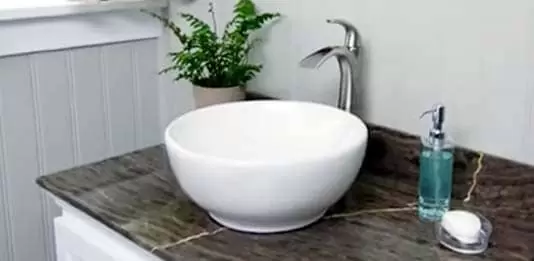
A drop-in sink is easy to remove, but it leaves a rough-cut opening that was meant to be hidden under the rim. Here too, pick a rectangular vessel sink. Drop-in sinks and the counters around them usually have predrilled faucet holes, so plan what to do with them.
- Cut the caulk
Run a utility knife around the rim of the sink to cut through the old caulk.
- Disconnect the drain and disposal
Remove the P-trap, the drain pipe and the garbage disposal if you have one, plus the faucet supply lines.
- Push the sink up
Loosen any clips under the rim, then push the sink up from below and lift it out.
- Deal with the opening and holes
Cover or replace the counter where the sink was. Reuse a faucet hole if it lines up with your new faucet, or hide the extra holes with a deck plate or hole covers.
- Install the vessel, drain and faucet
Set the vessel in place, connect the drain pipe and install the new faucet.
Over an Existing Farmhouse Sink
Replacing a farmhouse sink is the biggest job. The sink fills a notch in both the countertop and the cabinet front, and most vessel sinks cannot cover that. Plan the rework before you buy anything.
- Disconnect everything
Remove the drain pipe, the garbage disposal (if installed) and the faucet supply lines.
- Slide the sink out
Farmhouse sinks are heavy. With a helper, slide or lift the sink out of the counter and cabinet.
- Rebuild the counter and cabinet
Fill the cabinet front with a matching panel and close the countertop opening, usually with a new top or section.
- Set the vessel and finish the plumbing
Place the vessel sink, reconnect the drain (and disposal if your sink allows it), then install the new faucet.
Can You Put a Vessel Sink on Any Vanity?
It depends on the size and shape of the sink and on the vanity itself. The top must be solid and wide enough for the bowl, and deep enough to leave room for the faucet behind it.
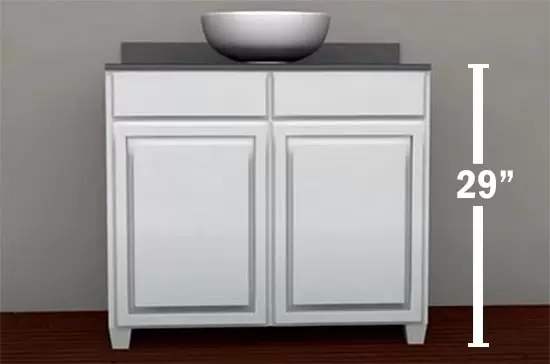
Height matters most. Because the bowl sits on top of the counter, the rim ends up higher than a regular sink. Most vessel sinks will work on a vanity at least 28 inches tall, but a vanity of 29 to 30 inches is the usual recommendation. Add the height of your bowl to see where the rim will land, and make sure that is comfortable for the people who use it every day.
Common Mistakes to Avoid
- Buying a round bowl for a rectangular cutout: it will not cover the corners of the old opening.
- Keeping a standard faucet: it is too short to reach over a vessel bowl.
- Assuming the disposal will fit: check the drain opening size before you buy.
- Using a drain with the wrong overflow: most vessel sinks have no overflow, so they need a drain made for that.
- Ignoring the final rim height: on a tall cabinet, a vessel can end up uncomfortably high.
FAQs
Can you put a vessel sink on top of an existing sink?
Not directly on the old bowl. You remove the old sink, close or cover the cutout, then set the vessel sink on a solid surface with only a drain hole under it.
Can you put a vessel sink on any vanity?
Most vanities work if the top is solid and strong enough. A lower vanity, around 29 to 30 inches, keeps the rim of the bowl at a comfortable height.
Can I keep my garbage disposal with a vessel sink?
Only if the vessel sink has a drain opening made for a disposal. Most vessel sinks have a small bathroom-size drain that will not take a disposal flange.
Do vessel sinks need a special faucet?
Yes. You need a tall vessel faucet or a wall-mounted faucet, because a standard faucet is too short to reach over the rim of the bowl.
What do I do with the old faucet holes?
Use one for the new faucet, or cover them with a deck plate or hole covers. On a new countertop section, you only drill the holes you need.
You can install a vessel sink where an existing sink was, but it is not as simple as buying any bowl and setting it in place. The old opening is large and rectangular, and there are faucet holes to deal with. Choose a rectangular vessel that covers the cutout or plan for new counter work, pair it with a tall faucet, and check the drain before you buy.