
Undermount vs Drop-in Kitchen Sink: Which One Should You Choose?

By Julian Gill Updated · 7 min read
Disclosure: Some of the links in this article may be affiliate links, which can provide compensation to me at no cost to you. You can read our affiliate disclosure in our privacy policy.
In this article
The sink is the hardest working spot in the kitchen, and the way it is mounted changes how it looks, how you clean it and what countertop you need. A drop-in sink sits on top of the counter; an undermount sink hangs below it. Here is how the two compare, from installation to daily cleaning.
Quick answer
Choose an undermount sink if you have a stone or solid-surface countertop and want a clean, modern look that is easy to wipe into. Choose a drop-in sink for laminate countertops, a tighter budget or a DIY replacement. Both work well; the countertop usually makes the decision for you.
Key takeaways
- Countertop first: undermount sinks need granite, quartz, marble or solid surface; drop-in sinks fit almost any top, including laminate.
- Installation: drop-in sinks are DIY-friendly; undermount sinks usually need a pro and a finished cutout.
- Cleaning: undermount wins on the counter, since crumbs wipe straight into the sink; drop-in rims collect grime.
- Cost: drop-in sinks are usually cheaper to buy and install.
- Material matters too: stainless steel, granite composite, cast iron and others behave differently whatever the mount.
What Is the Difference Between Undermount and Drop-in Sinks?
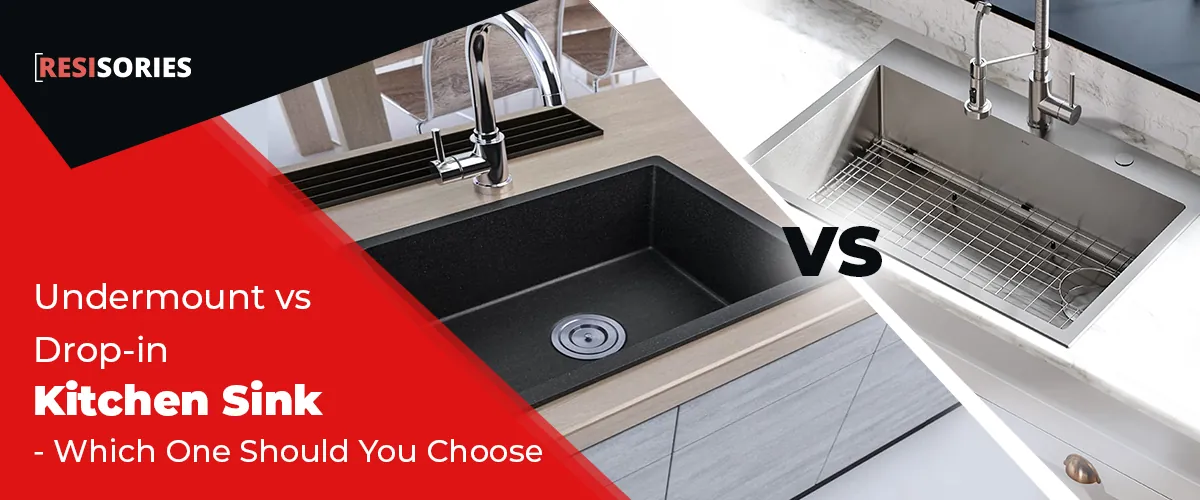
A drop-in sink, also called a self-rimming or top-mount sink, is lowered into a hole cut in the countertop. Its rim rests on top of the counter and carries the weight of the sink. A bead of sealant under the rim keeps water out.
An undermount sink is fixed to the underside of the countertop with clips or brackets and sealed with silicone. There is no rim on top. The cut edge of the countertop is finished and exposed, so the counter flows straight into the bowl.

Undermount vs Drop-in: Comparison Table
| Feature | Undermount sink | Drop-in sink |
|---|---|---|
| Look | Sleek, modern, no visible rim | Traditional, visible rim |
| Countertop | Granite, quartz, marble, solid surface | Almost any, including laminate |
| Installation | Harder, usually professional | Easier, DIY-friendly |
| Counter cleaning | Wipe crumbs straight into the sink | Grime collects around the rim |
| Maintenance | Check and renew the caulk | Clean and reseal the rim |
| Cost | Usually higher overall | Usually lower |
| Replacement | Harder, may involve the countertop | Easy if the new sink fits the cutout |
Each Sink Type in Detail
Best for stone countertops
Undermount Sink
An undermount sink gives a clean, modern line and makes the countertop easy to wipe. It also frees a little usable counter space, since there is no rim. It needs a solid, water-resistant countertop and a careful installation, because the clips and sealant carry the whole weight of the sink, the water and the dishes.
Best for laminate and DIY
Drop-in Sink
A drop-in sink comes in a huge range of styles, materials and colors and fits almost any countertop. It is easier and cheaper to install, and easier to replace later. The trade-off is the rim: crumbs and water collect along its edge, and you cannot sweep the counter straight into the bowl.
Undermount pros
- Seamless, modern look
- Easy to wipe the counter into the sink
- No rim to catch grime
- Suits stone and quartz countertops
Undermount cons
- Needs a solid-surface countertop
- Professional installation in most cases
- Caulk must be checked and renewed
- Harder and costlier to replace
Drop-in pros
- Works with laminate and most countertops
- DIY-friendly installation
- Lower overall cost
- Easy to swap for a sink of the same size
Drop-in cons
- Visible rim looks more traditional
- Grime collects around the edge
- Cannot sweep crumbs into the sink
- Sealant under the rim needs checking
Installation: Which Is Easier?
A drop-in sink is the friendlier DIY job. You cut or reuse the hole, run a bead of sealant, set the sink and tighten the clips. If you are replacing a drop-in with another one of the same size, it is often an afternoon's work.
An undermount sink is a different story. The cutout must match the sink exactly and the edge must be polished, which is work for a countertop fabricator. The sink is then clipped or bracketed to the underside and sealed. On stone and quartz, this is usually done when the countertop is installed. If you are shopping for one, see our picks of the best undermount sinks for quartz countertops and for granite countertops.
Cleaning and Maintenance
Cleaning is where many people make up their minds. An undermount sink lets you wipe crumbs and water straight from the counter into the bowl. A drop-in sink has a rim where gunk collects, so you clean around it by hand.
| Sink type | Cleaning pros and cons |
|---|---|
| Drop-in | Tricky to clean around the rim, but the bowl itself is easy to wipe down. |
| Undermount | Seamless to clean, but the caulk joint under the edge needs regular checks. |
| Both | Can show hard water stains; the sink material decides how easily they come off. |
For both types, the routine is the same: rinse and wipe the sink daily, use gentle cleaners and dry it to prevent water spots. Check the sealant once or twice a year and replace it as soon as it cracks or peels.
Performance and Everyday Use
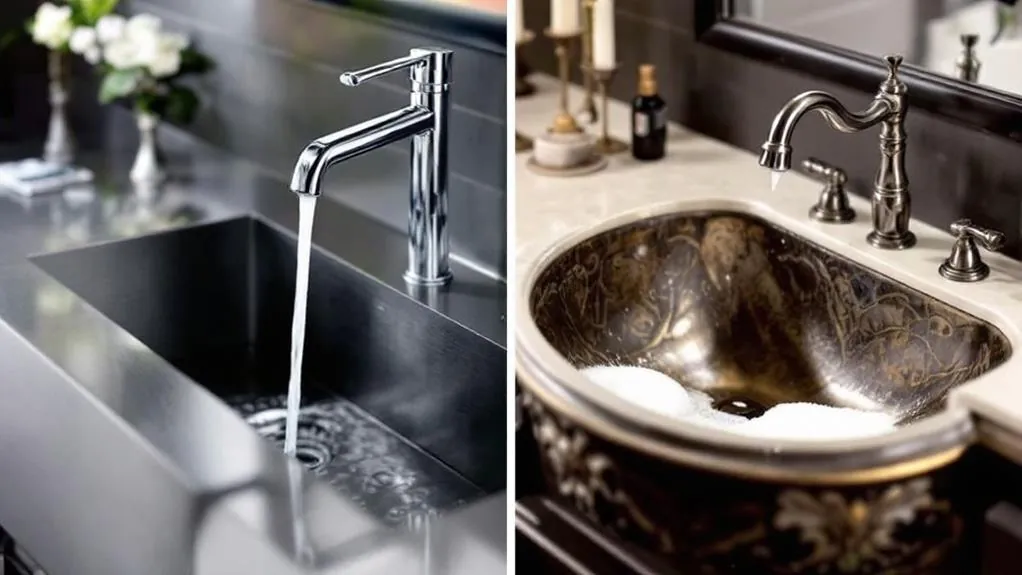
The mount changes the look and the cleaning, but the bowl does the work. Undermount sinks feel a little deeper in use, because there is no rim adding height above the counter. That helps with large pots and pans.
Noise is mostly a question of material, not mounting. Many stainless steel sinks have sound-deadening pads or coatings underneath, and heavier materials like cast iron are naturally quieter. If you want a quiet kitchen, check for those features on whichever type you choose.
Bowl layout matters too. A single large bowl handles sheet pans; a double bowl lets you wash and rinse separately. Our guide to 60/40 vs 50/50 kitchen sinks covers the options.
Cost and Style
Drop-in sinks are usually the budget choice. The sinks themselves cover every price range, and installation is simple. Undermount sinks usually cost more overall, because they go with stone or quartz countertops and need professional installation and a finished cutout.
On style, undermount sinks are the default in modern kitchens with stone tops. Drop-in sinks suit traditional and farmhouse kitchens, and they are the only choice with laminate. High-end materials like copper or fireclay raise the price whichever mount you pick.
Sink Materials and Design
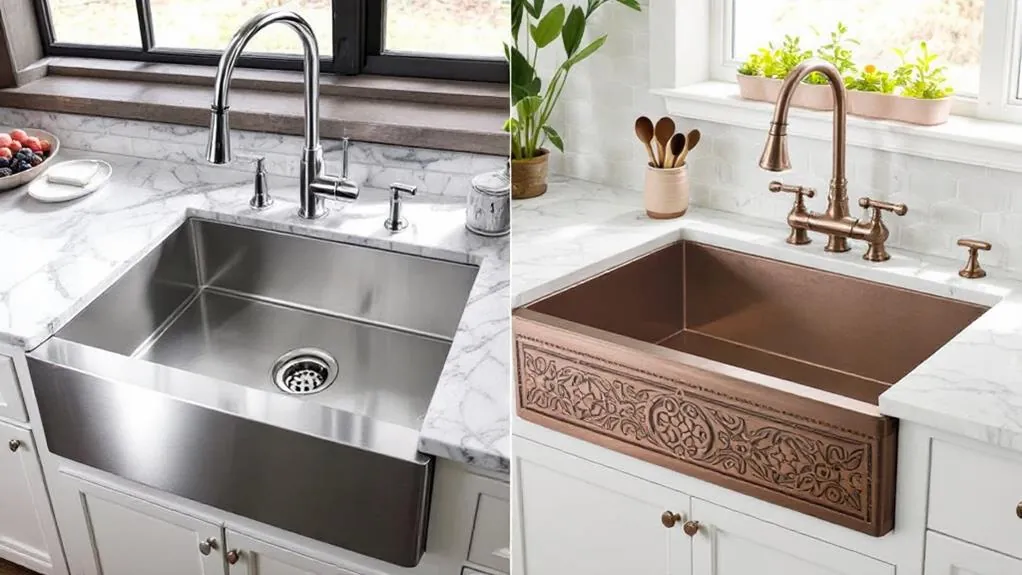
Both mounting styles are available in most materials. The material affects durability, stain resistance and maintenance, so choose it with the same care as the mount.
| Material | Style | Good to know |
|---|---|---|
| Stainless steel | Understated, commercial look | Durable and affordable, shows water spots |
| Granite composite | Industrial chic, farmhouse | Hides spots well, comes in many colors |
| Copper | Warm, earthy, luxe accent | Develops a patina over time |
| Marble or stone | High-end, sleek | Needs sealing and gentle cleaners |
| Solid surface | Versatile, many colors | Low maintenance, can be repaired |
For stone-look sinks, see our picks of the best granite composite sinks.
How to Choose Your Sink
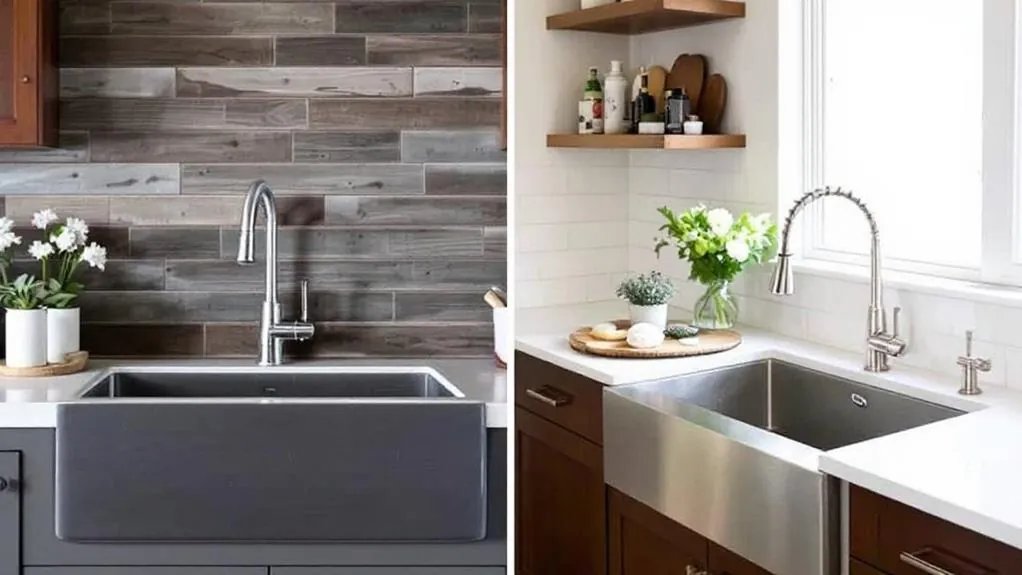
A sink stays in place for many years, so take a few minutes with these questions before you buy.
- What is your countertop? Laminate means drop-in. Stone, quartz or solid surface opens the door to undermount.
- How do you cook? Big pots call for a deep, large basin; lots of prep may call for a double bowl.
- How much do you want to clean? If wiping the counter into the sink matters, go undermount.
- Who installs it? If you are doing it yourself, a drop-in is the safer project.
- How long should it last? Choose a material that stands up to your daily use and your water.
FAQs
Can I replace a drop-in sink with an undermount sink without a remodel?
Usually not without new countertop work. The existing cutout is sized for a rim, so it must be recut and finished, and laminate tops cannot take an undermount sink at all. Often the countertop is replaced at the same time.
Do undermount sinks need a specific countertop material?
Yes. They need a solid, water-resistant countertop with a finished cut edge, such as granite, quartz, marble or solid surface. Laminate and most tile tops are not suitable.
Do drop-in sinks come with faucet holes?
Many do. Drop-in sinks are often sold with one to four pre-drilled faucet holes on the rim, so check that the number of holes matches your faucet.
Can I use a sink from one brand and a faucet from another?
Yes. Sinks and faucets are not tied to one brand. Just check the number of holes, the hole size and the deck thickness the faucet can mount on.
Are undermount sinks more prone to leaks or water damage?
They can be if the seal between the sink and the countertop fails. Check the caulk and the mounting clips from time to time and reseal when the caulk starts to crack or peel.
Undermount and drop-in sinks both do the job well; the right one depends on your countertop, your budget and how you like to clean. With a stone or quartz top, an undermount sink gives the cleanest look and the easiest wipe-down. With laminate, or for a simple DIY swap, a drop-in sink is the practical choice.