
How to Remove Hard Water Stains from a Porcelain Sink: 4 Easy Methods

By Julian Gill Updated · 7 min read
Disclosure: Some of the links in this article may be affiliate links, which can provide compensation to me at no cost to you. You can read our affiliate disclosure in our privacy policy.
In this article
- What Are Hard Water Stains?
- Before You Start: Protect the Porcelain
- Method 1: Calcium and Lime Remover (My Go-To for Heavy Buildup)
- Tools and Materials You Need
- Three Natural Ways to Clean Hard Water Stains
- Method 2: Cream of Tartar Paste
- Method 3: Lemon Juice and Salt
- Method 4: Soft Scrub and Turtle Wax
- Which Method Should You Choose?
- Common Mistakes to Avoid
- How to Keep a Porcelain Sink Shiny Every Day
- FAQs
A clean, shiny porcelain sink makes the whole bathroom look fresh. Hard water slowly ruins that look: a dull white haze, chalky rings around the drain and a crusty stopper. The good news is that you don't need harsh chemicals to fix it, only the right product and a little patience.
Quick answer
To remove hard water stains from a porcelain sink, use a mild acid that dissolves minerals: a calcium and lime remover, a cream of tartar paste, or lemon juice and salt, then rinse and dry. Scrub only with non-abrasive pads, so you don't scratch the glaze.
Key takeaways
- Act early: the longer hard water stains stay, the harder they are to remove.
- Acid beats scrubbing: minerals dissolve in mild acids, so let the product do the work.
- Protect the glaze: no steel wool, no harsh scouring powder, no strong chemicals on porcelain enamel.
- Dry the sink: water that evaporates is what leaves the stains in the first place.
What Are Hard Water Stains?
Hard water contains more dissolved minerals than average, mainly calcium and magnesium. Each time a drop of water dries on your sink, it leaves a tiny amount of those minerals behind. Over weeks and months, the layers build up into a white, chalky film or a crust around the faucet and the drain.
On white porcelain the stains look gray or cloudy. If your water also carries iron, they can turn orange or brown, like rust. Both types are surface deposits, so they can be removed if you treat them before they eat into the finish.
Before You Start: Protect the Porcelain
Porcelain is tough, but its glossy glaze scratches more easily than people think. Scratches hold dirt and minerals, so a sink cleaned the wrong way stains faster afterward.
- Use soft tools: a microfiber cloth, a sponge or a non-abrasive scourer.
- Avoid harsh chemicals: strong products can dull porcelain enamel and discolor it.
- Test first: try any new product on a small hidden spot, especially on an old or colored sink.
- Never mix cleaners: rinse well between two different products.
- Wear gloves and keep the room ventilated when you use a commercial remover.
Method 1: Calcium and Lime Remover (My Go-To for Heavy Buildup)
This is the method I used on my own bathroom sink. The stopper was old and badly discolored by calcium, and the whole basin had a dull haze. A calcium and lime remover (I used CLR Pro) did most of the work.
Tools and Materials You Need
- Putty knife (plastic is safest on porcelain)
- Calcium and lime remover
- Clean rags
- Rubber gloves
- Scrape the stopper
Lift out the stopper and work on the crusty deposits with the putty knife, very gently, to loosen the buildup. Go slowly: you want to lift the scale, not scratch the stopper or the sink.
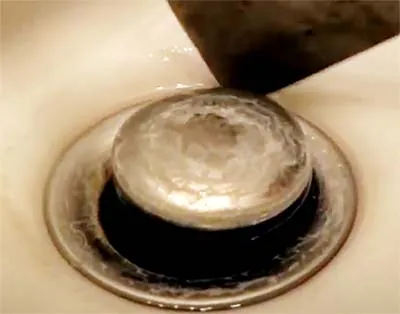
Working on the sink stopper with a putty knife to loosen the calcium deposits. After a careful scrape, most of the scale comes off and the stopper already looks better.
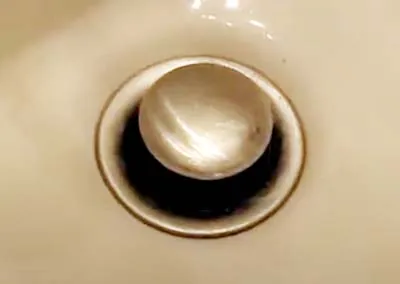
The stopper after scraping: the scale is gone and the metal shines again. - Apply the remover
Shake the bottle well. Pour or pump the cleaner directly onto the stained areas of the sink, focusing on the rings around the drain and under the faucet.
- Let it work
Leave it on for the contact time given on the label. If the scale is thick, rinse and repeat rather than scrubbing hard. Light stains often come off in one pass.
- Rinse and wipe
Rinse the sink thoroughly with water and wipe it with a clean rag. Dry it to check the result in good light.
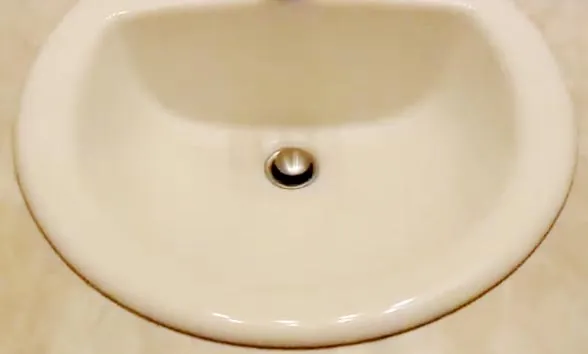
My porcelain sink after removing the hard water stains: the haze is gone.
Three Natural Ways to Clean Hard Water Stains
If you prefer kitchen-cupboard products, these three methods work well on light to moderate stains.
Method 2: Cream of Tartar Paste
If you live in a hard water area and have never cleaned with cream of tartar, it is worth a try. This natural powder is acidic, which is why it works on hard water stains and light rust marks.
- 1 cup of cream of tartar
- A non-abrasive scourer
- Water
- Wet the sink
Run some water over the basin so it is damp all over.
- Make the paste
Sprinkle the cream of tartar around the sink, focusing on the stained areas. It is a powder, so add a little water to turn it into a runny paste.
- Scrub and wait
Work on the spots with your scourer, then leave the paste on for a while so it can dissolve the minerals.
- Scrub again and rinse
Come back, scrub one more time, then rinse the paste away with the faucet and dry the sink.
Method 3: Lemon Juice and Salt
Lemon juice is a natural acid and salt adds a very mild scrubbing action. It is a simple method that also leaves a fresh smell.
- 1 lemon
- 2 tablespoons of salt
- A non-abrasive scourer
- Make the paste
Squeeze the lemon and mix the juice with the salt into a paste.
- Apply and rub
Spread the paste over the stains and rub it in gently.
- Let it sit
Leave it in place from a few minutes up to an hour, depending on how heavy the stains are.
- Scrub and rinse
Scrub once more, rinse with clean water and dry the sink. You should get a bright, sparkling basin.
Method 4: Soft Scrub and Turtle Wax
Soft Scrub removes lime and calcium buildup, and a thin coat of Turtle Wax afterward adds shine and helps water bead off the surface. Test the wax on a small spot first.
- Soft Scrub surface cleaner
- Turtle Wax
- Two clean rags
- Clean with Soft Scrub
Wet the sink with warm water. Shake the Soft Scrub bottle well and apply it to the basin.
- Wipe and rinse
After a few minutes, wipe the sink with a rag, then rinse it with clean water and dry it.
- Apply the wax
Shake the Turtle Wax, apply a thin layer to the dry sink and let it sit for about ten minutes.
- Buff it off
Wipe and buff the sink with a clean, dry rag until it shines.
Which Method Should You Choose?
| Method | Best for | Good to know |
|---|---|---|
| Calcium and lime remover | Heavy, old buildup and crusty stoppers | Follow the label, wear gloves, ventilate |
| Cream of tartar paste | Light stains and light rust marks | Natural and gentle |
| Lemon juice and salt | Regular light cleaning | Rinse well, salt is slightly abrasive |
| Soft Scrub and Turtle Wax | Restoring shine after cleaning | Test the wax on a small spot first |
Common Mistakes to Avoid
- Using steel wool or harsh scouring powder: it scratches the glaze and makes future stains worse.
- Mixing products: never combine cleaners, and rinse well before switching methods.
- Waiting too long: the older the stain, the more work it takes.
- Forgetting the faucet: clean the faucet base too, or the minerals keep dripping onto the clean basin. See our guide on removing hard water stains from faucets.
How to Keep a Porcelain Sink Shiny Every Day
Prevention takes far less time than removing old buildup. This is the simple routine I recommend.
- Every day: when you clean the house, wipe the sink with baking soda and your usual mild soap, then rinse.
- After use: dry the basin and the area around the faucet with a microfiber cloth whenever you can.
- Once a week: clean with lemon juice, or white vinegar and baking soda.
- Fix drips: a dripping faucet leaves a mineral trail in the same spot all day long.
If you live in a very hard water area, a water softener or a faucet designed for hard water can also reduce how often you need to scrub.
FAQs
What causes hard water stains on a porcelain sink?
Hard water carries dissolved calcium and magnesium. When drops of water dry on the porcelain, those minerals stay behind and build up into a white or chalky layer.
Can I use bleach on hard water stains in a porcelain sink?
Bleach is not the right tool for mineral scale. Hard water deposits dissolve with mild acids like vinegar, lemon juice, cream of tartar or a calcium and lime remover.
Will vinegar damage a porcelain sink?
Diluted white vinegar is safe on glazed porcelain for short contact times. Rinse it off well afterward, and avoid it on natural stone around the sink.
How often should I clean a porcelain sink to prevent hard water stains?
Wipe it dry after use whenever you can, do a quick clean with baking soda and mild soap every day or two, and a deeper clean with lemon juice or vinegar once a week.
Hard water stains on a porcelain sink come off with mild acids, not with force. Start with the gentlest method that works, use a lime remover for heavy buildup, and always rinse and dry the sink. A quick daily wipe then keeps it shiny for years.