
How to Remove Hard Water Stains from the Toilet

By Julian Gill Updated · 6 min read
Disclosure: Some of the links in this article may be affiliate links, which can provide compensation to me at no cost to you. You can read our affiliate disclosure in our privacy policy.
In this article
- Why Toilets Get Hard Water Stains
- Which Method Should You Use?
- Tools and Materials You Need
- Method 1: Vinegar and Baking Soda for Light Stains
- Method 2: Borax Paste for Heavier Stains
- Method 3: Fine Steel Wool, Pumice or an Acid Cleaner
- Fine Steel Wool or a Pumice Stone
- Hydrochloric Acid Cleaner (Last Resort)
- How to Prevent Future Stains
- Common Mistakes to Avoid
- FAQs
That brown or gray ring at the waterline is one of the most common complaints I hear about toilets. It is not dirt in the usual sense: it is minerals from hard water, and that is why ordinary toilet cleaner barely touches it. With the right product and a bit of patience, you can get the bowl white again and keep it that way.
Quick answer
To remove hard water stains from a toilet, pour in vinegar, sprinkle baking soda, let it sit, then scrub with a toilet brush. For heavier rings, apply a borax paste for about 20 minutes before scrubbing. Keep strong acid cleaners as a last resort, and never mix products.
Key takeaways
- Start gentle: vinegar and baking soda handle light stains without risk to the porcelain.
- Borax paste for heavier stains: let it sit for about 20 minutes before you scrub.
- Strong acids are a last resort: hydrochloric acid cleaners work, but they need gloves, ventilation and care.
- Prevention is easy: a quick daily swish with the brush stops new rings from forming.
- Soften the water: a water softener reduces mineral buildup in the whole house.
Why Toilets Get Hard Water Stains
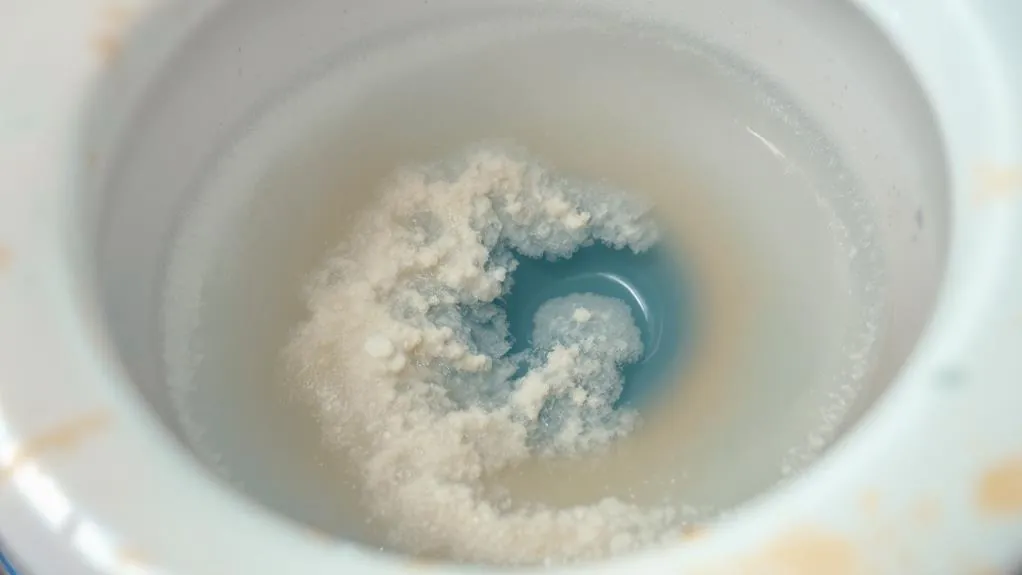
Hard water contains dissolved calcium and magnesium. In a toilet, the water sits still in the bowl for hours. A tiny bit evaporates at the surface, and the minerals it leaves behind collect right at the waterline. Over time they form a ring.
The same happens under the rim, where water trickles after each flush, and in streaks below the rim jets. The ring often turns brown or orange because it traps dirt, or because the water also carries iron.
Which Method Should You Use?
Match the method to the stain. In my experience, people jump to the strongest product first, when a gentler one would have done the job with no risk to the glaze.
| Method | Best for | Good to know |
|---|---|---|
| Baking soda and vinegar | Light stains | Mild, safe, cheap |
| Borax paste | Heavier stains | Leave it about 20 minutes |
| Fine steel wool or pumice | Stubborn spots | Use wet, test on a small area first |
| Hydrochloric acid cleaner | Persistent old rings | Last resort, gloves and ventilation |
| Daily maintenance | Prevention | Stops new buildup |
Tools and Materials You Need
- Rubber gloves
- Toilet brush
- White vinegar
- Baking soda
- Borax
- Spray bottle
- Fine-grade steel wool or a pumice stone (for stubborn spots)
- Small cup or bucket
Safety first
Wear gloves and keep the bathroom ventilated. Never mix cleaning products, especially bleach with vinegar or with acid-based toilet cleaners: the combination releases dangerous fumes. Flush and rinse well between two methods.
Method 1: Vinegar and Baking Soda for Light Stains
The toilet's porcelain surface is a prime spot for hard water stains, and this gentle method should always be your first try. Vinegar dissolves the mineral deposits, and baking soda adds a light scrubbing action.
- Lower the water level
Turn off the water supply valve behind the toilet and flush. With less water in the bowl, the cleaner reaches the ring directly instead of being diluted.
- Add the vinegar
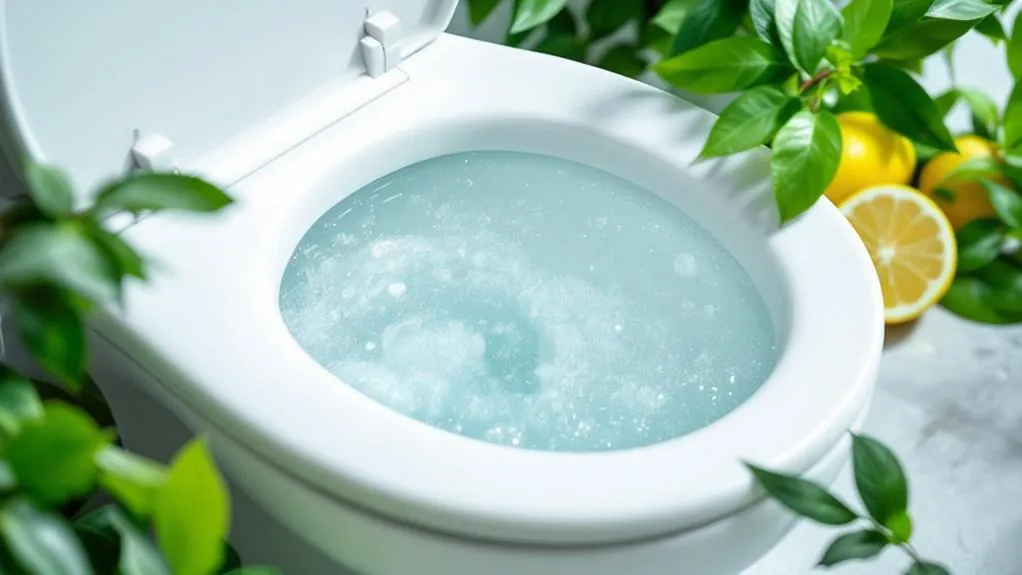
Pour about a cup of white vinegar around the bowl, aiming at the stains and under the rim. Use a spray bottle for the areas above the waterline.
- Sprinkle baking soda
Sprinkle baking soda over the stains. It will fizz. Let it work for 15 to 30 minutes.
- Scrub and flush
Scrub with the toilet brush, then turn the water back on and flush. Repeat if a light ring remains.
Method 2: Borax Paste for Heavier Stains
When vinegar alone is not enough, borax is the next step. It is still gentle on porcelain but works better on thick buildup.
- Make the paste
Mix borax with a little water or vinegar until it forms a paste that sticks to the porcelain.
- Apply it generously
After lowering the water level, spread the paste over the stained areas with the brush or a gloved hand.
- Wait about 20 minutes
Let the paste sit for about 20 minutes so it can loosen the minerals.
- Scrub and flush
Scrub firmly with the toilet brush, then restore the water and flush.
Method 3: Fine Steel Wool, Pumice or an Acid Cleaner
Some rings are years old and won't move with paste. Here you have two options. Try the mechanical one first.
Fine Steel Wool or a Pumice Stone
Use only the finest grade of steel wool, or a pumice stone made for toilets, and always on a wet surface. Rub the ring lightly, rinse often and check your progress. It takes more physical effort, but it works. Test it on a small area first, and stop if you see scratches or gray marks.
Hydrochloric Acid Cleaner (Last Resort)
Commercial toilet cleaners that contain hydrochloric acid dissolve persistent rings quickly. They are also harsh: wear gloves and eye protection, ventilate the room, follow the label exactly and never mix them with any other product. Use them rarely, because repeated use can wear the porcelain glaze.
How to Prevent Future Stains
A stain-free toilet bowl is mostly a matter of small, regular habits. Stopping the buildup is far easier than removing it.
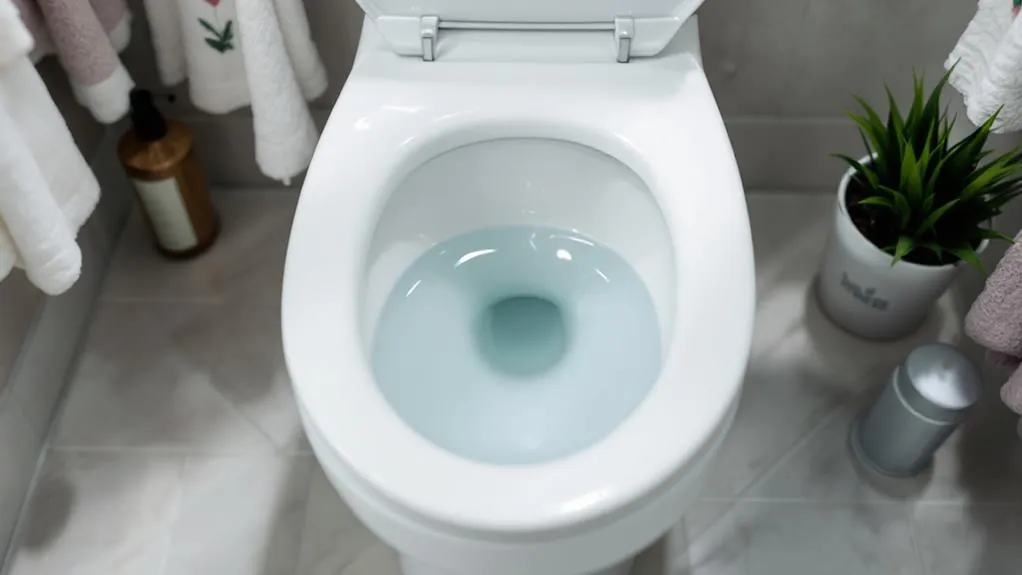
- Swish daily: a few seconds with the toilet brush disrupts the stain before it forms.
- Clean weekly with a mild cleaner: vinegar or a gentle toilet cleaner is enough.
- Inspect monthly: look at the waterline and under the rim for the first signs of a ring.
- Keep supplies at hand: a brush and a spray bottle of vinegar near the toilet make quick action easy.
- Consider a water softener: it reduces mineral buildup at the source, in every fixture.
- Fix a running toilet: constant trickling water leaves streaks below the rim.
Common Mistakes to Avoid
- Mixing products: bleach plus acid creates toxic fumes.
- Using coarse abrasives: coarse steel wool or scouring pads scratch the glaze, and scratches stain faster.
- Cleaning through full water: lower the water level so the product reaches the ring.
- Relying on bleach: it whitens and disinfects but does not remove minerals.
FAQs
Can I use bleach to remove hard water stains from a toilet bowl?
Bleach disinfects but does not dissolve mineral deposits, so it is a poor choice for hard water rings. Use vinegar and baking soda or a borax paste instead, and never mix bleach with acidic cleaners.
Are hard water stains a sign of a larger plumbing issue?
Usually they only mean your water is hard. But heavy scale can also build up inside the rim jets and pipes, so if your toilet flushes weakly, have the water and the fixtures checked.
How often should I clean my toilet to prevent hard water stains?
Swish the bowl with a brush daily or every few days, do a mild clean once a week and check the waterline and rim once a month.
Can hard water stains be removed from other bathroom fixtures?
Yes. Shower doors, faucets and sinks respond to the same mild acids, such as vinegar. Use soft cloths on glass and metal finishes rather than anything abrasive. See our guides for faucets and porcelain sinks.
Are all toilet cleaning products effective against hard water stains?
No. Many toilet cleaners disinfect and freshen but do little against mineral scale. Look for products made for lime and calcium, or use vinegar, baking soda or borax.
Hard water stains in a toilet come off when you treat them as what they are: minerals. Start with vinegar and baking soda, step up to borax paste, and keep fine steel wool or acid cleaners for the oldest rings. Then a quick daily swish and a weekly clean will keep the bowl white.