
Mapei AquaDefense vs RedGard vs Hydro Ban: Which Is Best? (2026)

By Julian Gill Updated · 7 min read
Disclosure: Some of the links in this article may be affiliate links, which can provide compensation to me at no cost to you. You can read our affiliate disclosure in our privacy policy.
In this article
Mapei AquaDefense, RedGard and Hydro Ban are the three liquid membranes I see most often behind shower tile. All three roll on, all three stop water, and all three will do the job when they are applied right. The real differences are in drying time, odor, color and how forgiving they are, and that is what this comparison is about.
Quick answer
Choose Mapei AquaDefense if you want the fastest drying and almost no smell, RedGard if you want a widely available, budget-friendly membrane, and Hydro Ban if you want a thin, tough coat with no fabric over the main surface. For a typical DIY shower over cement board, any of the three works when you apply two full coats.
Key takeaways
- All three are liquid membranes: you roll or brush them over the backer before tiling.
- Mapei AquaDefense dries fastest: about 30 to 50 minutes between coats, with no real odor.
- RedGard is the easy-to-find choice: ready to use, IAPMO listed as a shower pan liner, with a slight odor.
- Hydro Ban goes on thin: about 0.5 mm when applied, and it changes color as it cures.
- Two coats is the rule: for all three, one coat is not enough.
Mapei AquaDefense vs RedGard vs Hydro Ban at a Glance
| Product | Drying between coats | Odor | Minimum coats | Price |
|---|---|---|---|---|
| Mapei AquaDefense | 30 to 50 minutes | Almost none | 2 | Check Price |
| RedGard | 1.5 to 2 hours | Slight | 2 | Check Price |
| Hydro Ban | About 2 hours | Noticeable for some people | 2 | Check Price |
What These Membranes Are Used For
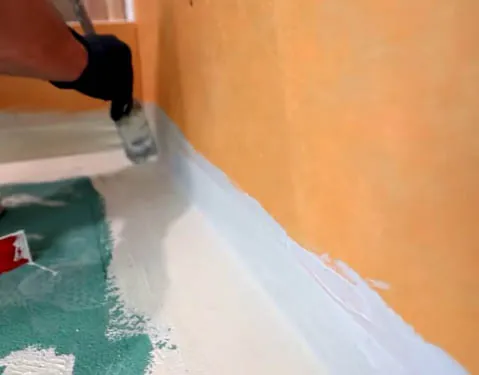
Hydro Ban, RedGard and Mapei AquaDefense are liquid waterproofing and crack-isolation membranes. You apply them over the backer board in showers, tub surrounds and other wet areas, then set tile directly on top once they are dry.
They do two jobs. First, they keep water that soaks through the grout away from the wall and floor structure. Second, they help stop small cracks in the substrate from telegraphing up into the tile. That is why you will also see them used under tile on floors that tend to crack.
All three bond to common tile substrates such as cement backer board and concrete. If you want to see how liquid membranes compare with sheets and foam boards, read our guide to the 4 types of shower waterproofing systems.
Mapei AquaDefense
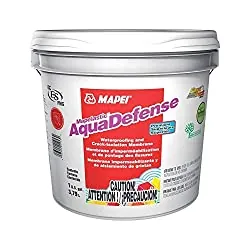
AquaDefense is the one I reach for when the schedule is tight. It dries in about 30 to 50 minutes between coats, and you can flood test or expose it to constant water after about 12 hours, where many membranes ask for 24.
It is also close to odorless, which matters in a small bathroom with poor ventilation or for anyone sensitive to smells. It rolls or brushes onto flat and curved surfaces alike, and it is good at crack isolation. The dried membrane is blue, which some people do not like, but it is hidden behind the tile anyway.
Pros
- Very fast drying between coats
- Ready for constant water exposure after about 12 hours
- Almost no odor indoors
- Applies easily by roller or brush on flat or curved surfaces
- Strong crack-isolation ability
Cons
- Needs at least two coats
- The blue color is not to everyone's taste before tiling
- Needs an extra vapor barrier in steam rooms
RedGard
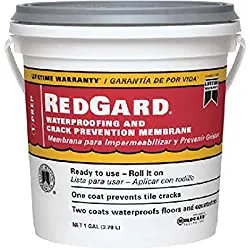
RedGard is probably the best-known liquid membrane in home centers. It comes ready to use, so you open the pail and roll it on with no mixing. It is listed with IAPMO for use as a shower pan liner, and the quick-dry formula cuts the wait between coats.
It is very versatile: showers, tub surrounds, steam rooms, spas and hot tub decks, pools and terraces are all on the list. It goes on pink and turns red as it dries, so you can see at a glance when a coat is ready. The price-to-quality ratio is excellent, which is why so many contractors keep a pail on the truck.
The downsides are small but real. There is a slight odor, two coats are a must, and you need mesh reinforcement at seams, corners and on shower receptors. Over cement board, many installers also roll a thinned first coat as a primer.
Pros
- Ready to use, no mixing
- IAPMO listed as a shower pan liner
- Color change shows when it is dry
- Wide range of wet-area uses
- Great value for the money
Cons
- Slight odor during application
- Needs two full coats
- Mesh reinforcement required at seams and on shower receptors
Hydro Ban
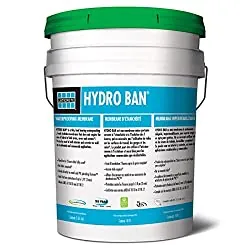
Hydro Ban, made by Laticrete, is a flexible, seamless, self-curing liquid membrane with a strong reputation in the trade. It is IAPMO approved, solvent-free and non-flammable, so it is safe to store and use in a home with kids around.
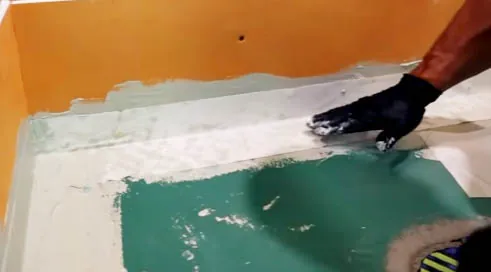
It goes on thin: about 0.5 mm once applied. You do not need fabric over the main surface, which saves time on large walls. Like RedGard, it changes color as it cures, turning a darker olive green, which makes inspection easy.
The main complaint is the smell. Some people find it uncomfortable, so open a window and run the bathroom fan while you work. It is also usually the most expensive of the three.
Pros
- Very easy to apply, even for beginners
- IAPMO approved
- Solvent-free and non-flammable
- Thin coat, about 0.5 mm
- No fabric needed over the main surface
- Color change makes inspection easy
Cons
- Odor can bother some people
- Usually the priciest of the three
- Slower to dry in damp or cool rooms
Which Is Best for Shower Waterproofing?
There is no single winner. All three are proven products, so the right one depends on your schedule, your room and your budget.
Best for speed and small rooms
Mapei AquaDefense
Choose it when you want to finish fast and work in a closed bathroom without a strong smell. Add a vapor barrier if the shower is a steam room.
Best value
RedGard
Choose it when you want a ready-to-use product you can find almost anywhere, with a clear color change and a long list of approved uses.
Best for large surfaces
Hydro Ban
Choose it when you want a thin, tough coat without fabric on the main surface and you do not mind a bit more cost and some odor.
How to Apply a Liquid Membrane the Right Way
These steps are general. Each brand has its own details, so read the label before you start.
- Prepare the substrate
Make sure the backer board is clean, dry, flat and securely fastened. Tape and mud the seams as the backer maker recommends.
- Reinforce seams and corners
Embed mesh or reinforcing fabric at seams, inside corners, changes of plane and around the drain, as the membrane maker specifies.
- Seal the penetrations
Work the membrane around the valve, shower arm and drain flange with a brush, using pipe collars where the system has them.
- Roll the first coat
Use a thick-nap roller and cover every square inch. Let it dry until it changes color or reaches the time on the label.
- Roll the second coat
Apply it at a right angle to the first so you do not leave thin spots or pinholes. Let it dry fully.
- Flood test before tiling
Plug the drain, fill the shower floor and wait as long as the maker recommends. No drop in level means you can tile.
FAQs
Is RedGard elastomeric, and is it toxic to breathe?
RedGard is an elastomeric membrane, so it stays flexible once it dries. It is not considered dangerous in normal use, but the odor can be unpleasant, so ventilate the room and follow the safety notes on the pail.
Can Mapei AquaDefense be used outdoors and on a shower pan?
Yes. Mapei AquaDefense can be used indoors and outdoors, and it works on shower floors and pans as well as walls.
How long does Hydro Ban take to dry?
Hydro Ban takes about 2 hours to dry on a dry surface in normal conditions. In damp or cool conditions it can take up to about 12 hours.
Do I need fabric or mesh with these membranes?
RedGard calls for mesh reinforcement at seams, corners and on shower receptors. Mapei AquaDefense and Hydro Ban use reinforcing fabric or tape at seams and changes of plane, so follow each maker's instructions.
Can I use these membranes over drywall in a shower?
No. In a wet shower area, apply them over cement backer board or another substrate listed on the label. Regular drywall is not a shower backer. See do I need to waterproof shower walls and floors before tiling for more.
Mapei AquaDefense, RedGard and Hydro Ban are all reliable shower membranes. Pick AquaDefense for speed and low odor, RedGard for value and availability, and Hydro Ban for a thin, fabric-free coat on large areas. Whichever you choose, reinforce the corners, roll two full coats and flood test before you tile.
Sources