
Luxury Faucets With 3ds Max and V-Ray: 5 Iconic 3D Printed Designs

By Julian Gill Updated · 5 min read
Disclosure: Some of the links in this article may be affiliate links, which can provide compensation to me at no cost to you. You can read our affiliate disclosure in our privacy policy.
In this article
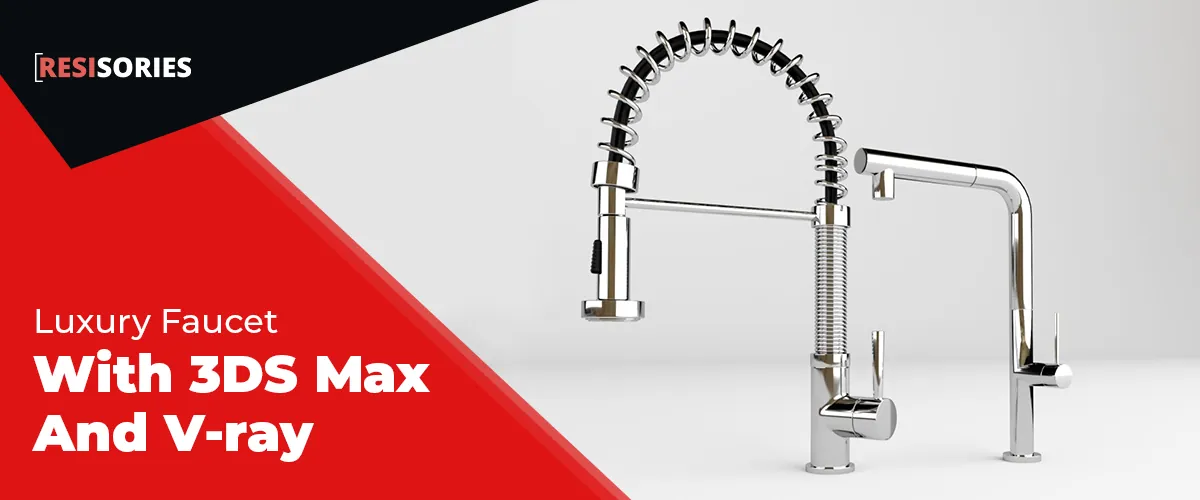
Most faucets start as a sketch, but the most daring ones are born in software. Designers model them in 3ds Max, render them in V-Ray to see how light plays on the metal, and some of these designs are then printed in real metal, layer by layer. Here are five luxury faucets that show what this mix of 3D design and 3D printing can do.
Quick answer
Luxury 3D faucets are designed in 3D software such as 3ds Max, rendered with V-Ray for photo-realistic previews, then made with metal 3D printing. Iconic examples include the DXV Shadowbrook, the Kallista Grid, the Grohe Allure Brilliant Icon 3D, the Webert One-A and the Deca 3D printed basin mixer.
Key takeaways
- Design first, in 3D: complex shapes are modeled and rendered long before any metal is printed.
- Printing frees the shape: hidden waterways and open, geometric forms are hard to make by casting.
- Negative space is the signature: many of these faucets hide where the water flows.
- Showpieces, not everyday buys: these are design statements from luxury brands.
How 3ds Max and V-Ray Are Used for Faucet Design
3ds Max is a 3D modeling program. Designers use it to build the faucet shape on screen: the body, the spout, the handle and the path the water will follow. Because the model is digital, they can change a curve or a proportion in minutes instead of making a new prototype.
V-Ray is a rendering engine that works inside 3ds Max. It simulates real light and materials, so a designer can see how polished chrome, brushed nickel or matte black will look on the shape, with realistic reflections and shadows. Those renders are used for design reviews, catalogs and websites, often before the first real faucet exists.
For 3D printed faucets, the same digital model becomes the file the metal printer follows. That is why the most sculptural faucets of recent years came out of this workflow.
DXV Shadowbrook Bathroom 3D Faucet
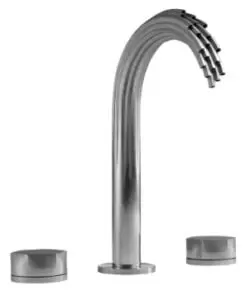
This trio of 3D printed faucets was created by DXV, a brand of American Standard, to show off precise, high-end manufacturing. The faucets were printed in real metal using an additive laser sintering process on metal powder.
What makes the Shadowbrook special is its design. It looks like flowing liquid metal frozen in time, inspired by water running over rocks in a river. The effect comes from 19 separate small waterways, something that would be very hard to make with traditional methods. It was a pioneer among 3D printed metal faucets made for homes.
Kallista Grid Faucet by Kohler
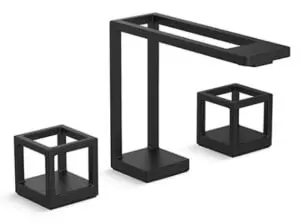
The Grid is a 3D printed faucet from Kallista, a Kohler division, and it was voted Best of Show at the Kitchen and Bath Industry Show (KBIS) 2018. It was developed with 3D printing specialists and is all about clean, minimal lines.
The shape is the outline of a geometric cube inspired by the De Stijl movement. Instead of a traditional spout, it uses negative space, so you keep wondering where the water comes from. It comes in a durable matte black powder-coated finish that resists water spots and fingerprints. If you like this look in a more practical form, see our picks of luxury kitchen faucets.
Grohe Allure Brilliant Icon 3D
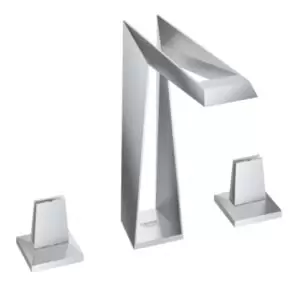
This iconic piece from the German brand was built by stacking 4,700 layers of steel, each 0.006 millimeters thick. It is a three-hole, deck-mounted faucet printed in metal.
Its very thin, flowing form seems to defy how water should move, with a sharp profile that looks borrowed from a futuristic spaceship. Michael Seum, vice president at Grohe, explained that the thin shape was meant to suspend belief and make people ask whether the faucet even works.
Webert One-A Faucet
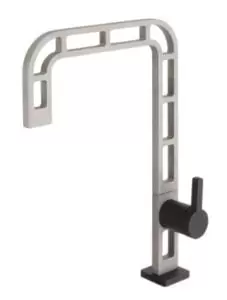
Massimiliano Settimelli designed the One-A faucet for the Italian brand Webert. It has a dynamic, geometric elegance and a 3D texture made possible by additive manufacturing.
Like the Grid, the One-A plays with negative space, so you find yourself searching for the channel the water flows through. It gives a kitchen or bathroom a striking, sculptural focal point.
Deca 3D Printed Basin Mixer
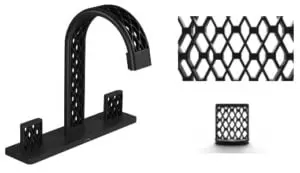
The Deca 3D Printed Basin Mixer combines technology and minimalism. Its smooth look comes from geometric patterns softened by rounded contours.
The water flow is hidden, so you keep looking for its source. The faucet was designed by Pedro Martins and manufactured by Deca.
What These Designs Have in Common
| Faucet | Brand | Design idea |
|---|---|---|
| Shadowbrook | DXV (American Standard) | Water over river rocks, 19 small waterways |
| Grid | Kallista (Kohler) | Open cube outline inspired by De Stijl |
| Allure Brilliant Icon 3D | Grohe | Ultra-thin flowing line |
| One-A | Webert | Geometric 3D texture and negative space |
| 3D Printed Basin Mixer | Deca | Geometric patterns with hidden flow |
All five use 3D design and metal printing to do what casting and machining struggle with: hidden water channels, open frames and very thin walls. They are less about everyday practicality and more about showing where faucet design can go.
FAQ
What are 3ds Max and V-Ray?
3ds Max is 3D modeling software, and V-Ray is a rendering engine that works with it. Designers use them together to build a faucet in 3D and produce photo-realistic images before anything is made.
Is 3D printed metal strong?
It can be. Metal parts made by laser sintering are dense and solid, and with the right process and finishing they can be used for working fixtures like these faucets.
Can you buy a 3D printed faucet?
Some were released as limited or showcase pieces by luxury brands. Availability changes, so check with the brand or an authorized showroom.
Do 3D printed faucets work like regular faucets?
Yes. The printed body changes the shape and the water path, but the faucet still has to turn on, mix and connect to the supply like any other faucet.
Are 3D printed faucets worth it?
For most homes, a well-made conventional faucet is the practical choice. A 3D printed faucet is a design statement for people who want a one-of-a-kind piece. For high-end options you can actually install today, see our high-end kitchen faucet reviews.
3ds Max and V-Ray let designers shape and preview a faucet in detail, and metal 3D printing turns those daring models into real fixtures. The Shadowbrook, Grid, Allure Brilliant Icon 3D, One-A and Deca mixer show how far the idea can go. If you want that luxury feel at home, look for strong design backed by a quality valve and a durable finish.